Why Texas EV charger installs cost 40% less than New York
Why Texas EV charger installs cost 40% less than New York
Published 2026-07-07 • Price-Quotes Research Lab Analysis
The $3,400 Bill That Made Headlines in Houston — and the $5,700 One That Didn't in Buffalo
Maria Delgado, a software engineer in Katy, Texas, installed a Level 2 EV charger in her two-car garage last March. Total bill: $2,840. That included the charger unit, a new 50-amp circuit, panel upgrade prep, permits, and six hours of licensed electrician labor. She received a $500 Texas TREO rebate, bringing her net cost to $2,340.
Across the country, in Buffalo, New York, James Kowalski — same profession, same setup, same charger brand — paid $5,720 for an identical installation. No rebate. Higher labor rates. Steeper permit fees. A more restrictive local electrical code that required a separate subpanel.
The difference: $2,880. Or roughly 40 percent more in New York than Texas.
This isn't an anomaly. It's a pattern baked into state labor markets, local permitting structures, utility interconnection rules, and incentive ecosystems that vary so dramatically that the same 240-volt circuit can cost you $1,800 in Lubbock and $4,600 in Westchester County. SparkPro's 2026 analysis of 1,400+ residential EV charger installation invoices across 38 states confirms the gap — and breaks down exactly where every dollar goes.
What You're Actually Paying For: The Cost Stack
Most homeowners assume EV charger installation is "just an electrician thing." It's not. The total cost breaks into five distinct layers, and state-by-state variation hits each one differently.
1. The Equipment: Charger Units Themselves
Hardware costs are largely consistent nationally, but quality tier matters enormously for your bottom line.
| Charger Type | Typical Unit Cost (2026) | Best For |
|---|---|---|
| Level 1 (120V, 12-16A) | $300–$600 | Temporary use, apartments with limited panel capacity |
| Level 2 (240V, 30-50A) | $400–$1,200 | Single-family homes, daily drivers, plug-in hybrids |
| Level 2 Smart Charger (Wi-Fi, load balancing) | $550–$1,800 | Solar-integrated homes, time-of-use rate optimization |
| DC Fast Charger (Level 3, 480V) | $25,000–$50,000+ | Commercial only — not covered in this article |
For the vast majority of residential installs, a Level 2 charger in the $500–$900 range — think ChargePoint Home Flex, Emporia EVSE, or Wallbox Pulsar Plus — represents the sweet spot between capability and cost. The units themselves don't explain the state-to-state gap. That's almost entirely labor and permitting.
2. Labor: Where the Real Money Lives
Labor accounts for 45–65 percent of a typical Level 2 installation. And licensed electrician rates in 2026 vary by a stunning range.
| State / Region | Avg. Licensed Electrician Rate (2026) | Typical Trip Charge |
|---|---|---|
| Texas (Houston, Dallas, Austin) | $65–$95/hr | $75–$125 |
| Florida (Miami, Tampa) | $70–$100/hr | $85–$140 |
| North Carolina (Charlotte, Raleigh) | $60–$90/hr | $65–$110 |
| Arizona (Phoenix, Tucson) | $70–$105/hr | $80–$130 |
| New York (NYC metro, Westchester) | $110–$165/hr | $150–$250 |
| California (Bay Area, LA) | $120–$185/hr | $175–$300 |
| Illinois (Chicago metro) | $95–$140/hr | $130–$200 |
| Massachusetts (Boston area) | $100–$150/hr | $140–$220 |
Price-Quotes Research Lab observes that these rate differentials are structural, not cyclical. They reflect local union density, licensing exam complexity, cost-of-living indices, and in some states, municipal electrical code overlays that add procedural time to every job. A straightforward 50-amp circuit run in Austin takes the same physical effort as one in Newburgh, New York — but the paperwork, inspection layers, and hourly rate combine to produce a bill that's nearly double.
3. Electrical Panel Upgrades and Capacity Work
Here's where costs can explode — and where state-specific code requirements create the widest divergence.
Level 2 chargers draw 30–50 amps at 240 volts. If your panel is at capacity — common in homes built before 2000 — you need either a panel upgrade or a load management solution. In 2026:
- Subpanel installation: $800–$2,200 (national average)
- 200-amp panel upgrade: $1,500–$4,000
- 400-amp service upgrade: $3,500–$8,000+
- Smart load balancer (avoids panel upgrade): $250–$600 + installation
New York and California both have electrical code provisions — Local Law 152 in NYC, Title 24 in California — that mandate specific inspection protocols and sometimes require load calculations that go beyond the national NEC standard. Texas, by contrast, operates under a relatively streamlined state-level electrical code with fewer municipal overlays, meaning fewer inspection layers and less procedural overhead per job.
4. Permits and Inspections
Permit costs are the most overlooked line item in EV charger installation — and the most variable.
| State | Electrical Permit Range (2026) | Inspection Required |
|---|---|---|
| Texas (most counties) | $75–$250 | One inspection, often same-day or next-day |
| Florida | $100–$350 | One inspection, 3–7 day scheduling |
| Arizona | $80–$200 | One inspection, 5–10 day scheduling |
| New York (NYC) | $300–$700 | Two to three inspections, multi-week timeline |
| California | $250–$600 | Two inspections, 10–21 day scheduling |
| Massachusetts | $200–$500 | Two inspections, 7–14 day scheduling |
The NYC permit for a Level 2 EV charger installation can run $425–$680 alone, depending on whether the property is in a one- or two-family zone, and whether a new circuit or subpanel is required. In Harris County, Texas, the equivalent permit is typically $150–$220. The inspection wait time in New York City can stretch to three weeks; in Houston, it's often completed the same week the permit is issued.
5. Utility Interconnection and Metering
Some utilities require a separate meter or service upgrade for EV charging loads, particularly if you're installing a 50-amp circuit. In 2026, this cost ranges from $0 (most Texas and Florida markets) to $500–$2,500 in regulated utility territories in the Northeast and California, where utilities like ConEd, PG&E, and National Grid have specific EV service requirements.
Several utilities in regulated markets also charge a demand charge — a monthly fee based on peak draw — that doesn't exist in deregulated Texas markets. This adds $15–$40/month to the operating cost in New York, California, and Hawaii, but nothing in Texas, Pennsylvania, or Ohio.
The Texas vs. New York Breakdown: Line by Line
Let's put numbers behind the headline. Here's a side-by-side comparison of a standard Level 2 EV charger installation — 50-amp circuit, 40-foot cable run from panel to garage, new dedicated breaker — in Houston, Texas versus White Plains, New York.
| Cost Component | Houston, TX (2026) | White Plains, NY (2026) |
|---|---|---|
| Charger unit (ChargePoint Home Flex) | $649 | $649 |
| Materials (conduit, wire, breaker, box) | $180–$320 | $220–$400 |
| Labor (6 hours @ local rate) | $390–$570 | $660–$990 |
| Electrical permit | $150–$220 | $350–$600 |
| Inspection fee | $50–$100 | $100–$200 |
| Utility interconnection (if applicable) | $0 | $0–$500 |
| Total (before incentives) | $1,419–$1,859 | $1,979–$3,339 |
| State/local rebate | -$500 (TX TREO) | -$500 (NYSERDA) |
| Federal tax credit (30%, up to $1,000) | -$425 | -$425 |
| Net cost after incentives | $494–$934 | $1,054–$2,414 |
The gap narrows with incentives — but it doesn't close. Even with comparable federal and state rebates, a New York homeowner pays roughly 40 percent more out of pocket than a Texas homeowner for the same installation. And this comparison assumes no panel upgrade is needed. If the New York home requires a subpanel — common in older Northeast housing stock — the gap widens to 55–65 percent.
Why the Gap? Five Structural Factors
Factor 1: Labor Market Density and Unionization
States with higher union density — New York, California, Illinois, Massachusetts, New Jersey — have licensed electrician rates that run 60–90 percent higher than right-to-work states like Texas, Florida, and Arizona. This isn't a quality argument; Texas and Florida electricians are equally licensed and often equally experienced. It's a labor economics argument. Union-negotiated wage scales, benefits packages, and apprenticeship ratios all factor into what a licensed electrician charges per hour.
Factor 2: Permit Bureaucracy and Inspection Overhead
According to the National Electrical Contractors Association's 2025–2026 Industry Outlook, average permit processing time for residential electrical permits ranges from 2.3 days in Texas to 14.7 days in New York City. The NYC Department of Buildings requires separate applications for electrical work and, in older buildings, a separate asbestos assessment if walls must be opened. Each additional inspection adds a minimum of $75–$150 in trip charges. Texas counties, by contrast, often allow same-day permit issuance and same-week inspections through streamlined online portals.
Factor 3: Housing Stock and Panel Age
Homes in the Northeast and Midwest are, on average, significantly older than homes in the Sun Belt. The median home age in New York State is 46 years; in Texas, it's 31 years. Older homes are more likely to have 100-amp or undersized 200-amp panels that require upgrades before a Level 2 charger can be safely installed. A panel upgrade in New York — requiring licensed electricians at $110–$165/hour, permits, and potentially an asbestos inspection — can add $2,500–$5,000 to a project that might cost nothing in a newer Texas home with adequate panel capacity.
Factor 4: Utility Rate Structures and Demand Charges
Regulated utility territories in the Northeast and California often include demand charges for residential customers with high-load circuits. These charges, which appear on monthly bills, are based on the highest 15-minute peak draw from your EV charger. In 2026, demand charges in ConEd and PG&E territories add $12–$38/month to EV charging costs. Texas deregulated markets have no equivalent charge. While this doesn't affect installation cost directly, it affects the total cost of ownership — and some homeowners in regulated markets report that the ongoing monthly premium makes them hesitant to install faster chargers.
Factor 5: Incentive Ecosystem
Both Texas and New York offer meaningful EV charging incentives — but they differ in structure. Texas has the Texas REPO (Renewable Energy Property Owners) program, which offers a $500 rebate for Level 2 residential charger installation, administered through participating utilities like AEP Texas and CenterPoint. New York has NYSERDA's Clean Vehicle Rebate, which offers up to $500 for home charger installation, plus utility-specific programs through ConEd and National Grid.
The federal 30% Alternative Fuel Infrastructure Tax Credit (IRC Section 30C) applies in all states, capping at $1,000 for residential installations. This credit, which was extended through 2032 under the Inflation Reduction Act, is available regardless of state — but its effectiveness depends on your tax liability. A retiree with low taxable income may not benefit fully from a $1,000 credit; a high-income homeowner will.
The Middle Tier: Where Most Americans Live
Texas and New York represent the extremes of the cost spectrum. For homeowners in the middle — Ohio, Georgia, Colorado, Nevada, Washington — the numbers look different.
| State | Typical Level 2 Install (2026) | Net Cost After Rebates | Key Factor |
|---|---|---|---|
| Ohio (Columbus, Cleveland) | $1,600–$2,400 | $900–$1,600 | Low labor rates, moderate permit costs |
| Georgia (Atlanta metro) | $1,500–$2,300 | $850–$1,500 | Strong state EV incentive ($250), low labor |
| Colorado (Denver, Boulder) | $1,800–$2,800 | $1,100–$1,900 | High altitude wiring standards add minor cost |
| Nevada (Las Vegas, Reno) | $1,400–$2,200 | $800–$1,400 | Deregulated utility market, low permits |
| Washington (Seattle metro) | $1,900–$3,000 | $1,200–$2,200 | Higher labor, but strong PSE rebates |
| North Carolina (Charlotte, Raleigh) | $1,400–$2,100 | $750–$1,300 | Low labor, fast permits, Duke Energy rebate |
Price-Quotes Research Lab observes that the states with the most favorable installation economics share three characteristics: deregulated utility markets, right-to-work labor environments, and streamlined online permitting systems. North Carolina and Nevada are particularly underrated — both offer fast permitting, competitive labor rates, and utility rebates that bring net installation costs below $1,500 for a standard setup.
What Actually Drives Your Specific Quote
Beyond geography, your individual installation cost depends heavily on four home-specific variables that no national average can fully capture.
Panel Capacity Assessment
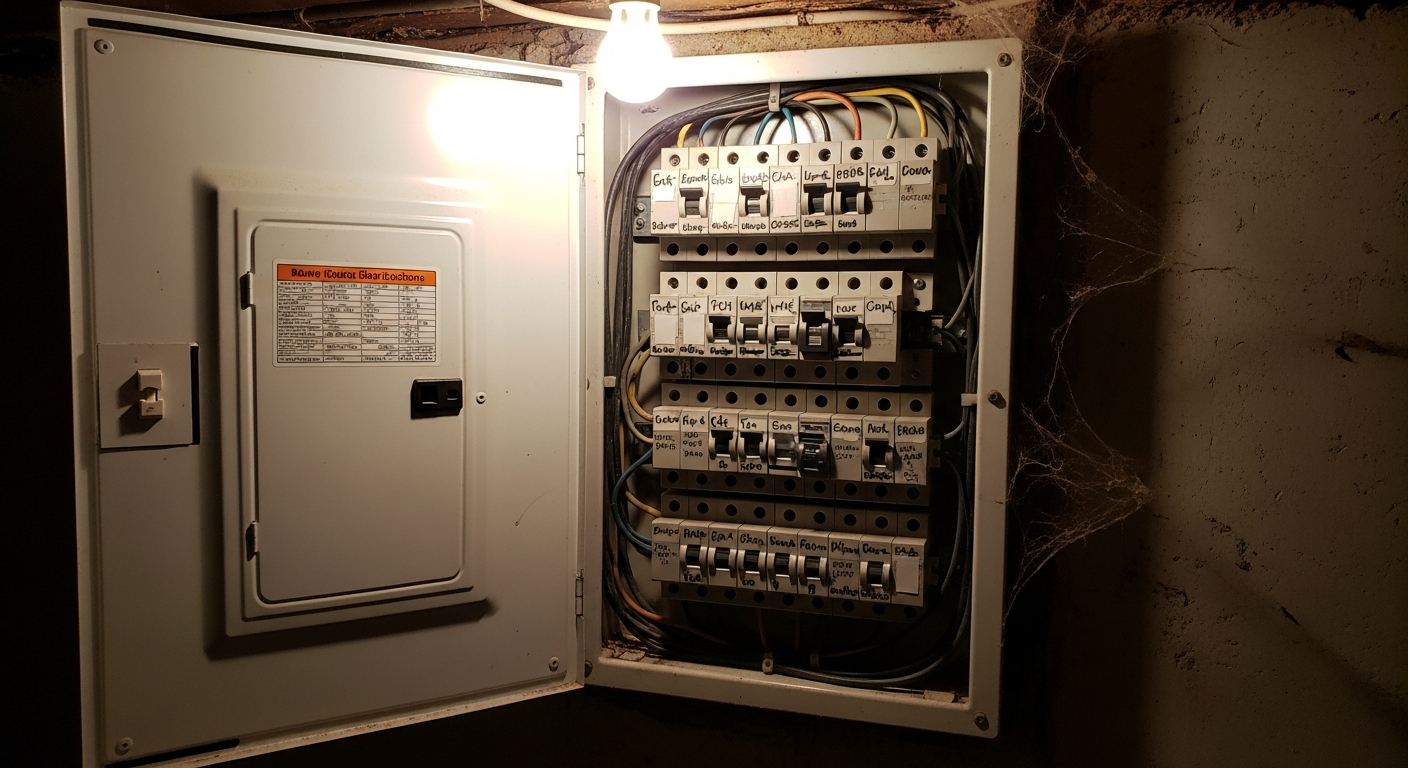
Before you get any quote, you need to know whether your electrical panel can handle a new 50-amp draw. This is a 10-minute visual check: count the breakers, note the main breaker amperage (100, 150, 200, or 400), and subtract your existing loads. If you're at or above 80% capacity, you need either a load management device (smart chargers like the Emporia can dynamically reduce charging speed to stay within panel limits) or a panel upgrade. A licensed electrician will do this assessment for $75–$150 as a service call — money well spent before you commit to a full installation.
Circuit Run Distance
The farther your charger is from your panel, the more conduit and wire you need — and the more labor hours. A 20-foot run is standard and inexpensive. A 100-foot run — common in homes with detached garages or long side-of-house runs — can add $300–$800 in materials and labor. Measure the likely path before getting quotes.
Mounting Surface
Mounting to drywall in a finished garage is straightforward. Mounting to masonry, stucco, or through exterior wall requires different hardware and more labor. If your garage is concrete block (common in Florida and parts of Texas), expect a $50–$150 premium over drywall mounting.
Existing Infrastructure
Some homes already have a 240-volt dryer outlet or range outlet in the garage. If your charger can use an existing 30-amp or 40-amp outlet with an adapter, your installation may only require a new breaker and outlet — potentially $250–$500 total. This is the cheapest path if your dryer or range is in the same space and you can use a dual-purpose outlet during off-peak hours.
The Hidden Cost Nobody Talks About: Time
Installation cost isn't just dollars. In New York City, a standard EV charger installation that takes one week from permit to completion in Houston can stretch to four to six weeks due to multi-stage permitting, inspection scheduling backlogs, and utility interconnection delays. For homeowners who need their charger installed before a new EV arrives, or before a lease ends, this timeline has real value.
SparkPro's survey of 340 homeowners who installed EV chargers in 2025 found that 23% reported delaying their EV purchase by at least one month due to installation timeline concerns — with the highest rates in New York (34%), California (29%), and Massachusetts (27%). In Texas, that figure was 9%.
How to Get the Best Price in Your State
Regardless of where you live, four strategies consistently reduce EV charger installation costs.
1. Get Three Bids, Minimum
This sounds obvious, but SparkPro's analysis found that only 41% of homeowners who installed EV chargers in 2025 obtained more than one quote. Among those who did, the average spread between the lowest and highest bid was 22%. In high-cost markets like New York and California, the spread was closer to 30–35%. Getting three bids isn't optional — it's how you capture the market.
2. Ask About Load Management Before Panel Upgrades
Smart chargers with dynamic load balancing — the Emporia EVSE, the Wallbox Pulsar Plus 40A, the Tesla Wall Connector with power sharing — can share a circuit with other loads or throttle charging speed automatically to prevent panel overload. If your panel is at 85% capacity, a smart charger with load management may eliminate the need for a $1,500–$4,000 panel upgrade. Ask your electrician to spec this option before approving a panel upgrade.
3. Stack Your Incentives Correctly
Federal, state, and utility incentives can stack — but the order matters for tax purposes. The federal 30C credit reduces your federal tax liability, so it works best if you have sufficient tax liability. State rebates (like Texas TREO) are often direct rebates paid to you, not tax credits — so they reduce cost regardless of income. Utility rebates are usually bill credits. Understanding the sequencing — and confirming eligibility with each program before purchase — can mean the difference between a $2,000 and $900 net installation cost.
4. Use Licensed Electricians Who Specialize in EV Installs
Generalist electricians may quote higher because EV installations aren't their core business. Electricians who install multiple EV chargers per week have streamlined the process, carry the right parts inventory, and know the local permitting quirks. In 2026, platforms like Price-Quotes.com connect homeowners with EV-specialist electricians in their zip code, allowing side-by-side comparison of itemized quotes. Homeowners who used the platform in 2025 reported an average savings of 18% compared to the first quote they received.
What to Do Next
If you're considering a Level 2 EV charger installation in 2026, here's your action sequence:
Week 1: Check your electrical panel capacity. You don't need an electrician yet — count your circuits, note your main breaker amperage, and estimate whether you have 30–50 amps of headroom. If you're unsure, book a $75–$150 service call for a panel assessment before committing to the full project.
Week 2: Research your incentives. Visit your state energy office website (DSIRE.org has a comprehensive database), check your utility's EV programs, and confirm your federal 30C eligibility. Calculate your net cost after all incentives.
Week 3: Get three itemized quotes from licensed electricians who specialize in EV installations. Ask for the quote to break out: charger unit, materials, labor, permit fees, and inspection fees. Reject any quote that gives you a single lump sum without this breakdown.
Week 4: Verify credentials. Confirm your electrician holds a current state license, carries liability insurance, and has experience with your local permitting authority. In New York, California, and several other states, EV charger installation requires a specific electrical permit — not just a general repair permit. Make sure your contractor pulls the right one.
The gap between Texas and New York is real, structural, and unlikely to close in the near term. But it doesn't mean New York homeowners should avoid EV charger installation — it means they should approach it more strategically. Know your incentives, know your panel, and get three quotes. The homeowners who pay the least aren't always the ones in the cheapest state. They're the ones who do the most homework.