Whole-House Generator Installation Costs: The Real Numbers Behind Standby vs. Portable, Gas vs. Propane
Whole-House Generator Installation Costs: The Real Numbers Behind Standby vs. Portable, Gas vs. Propane
Published 2026-04-10 • Price-Quotes Research Lab Analysis
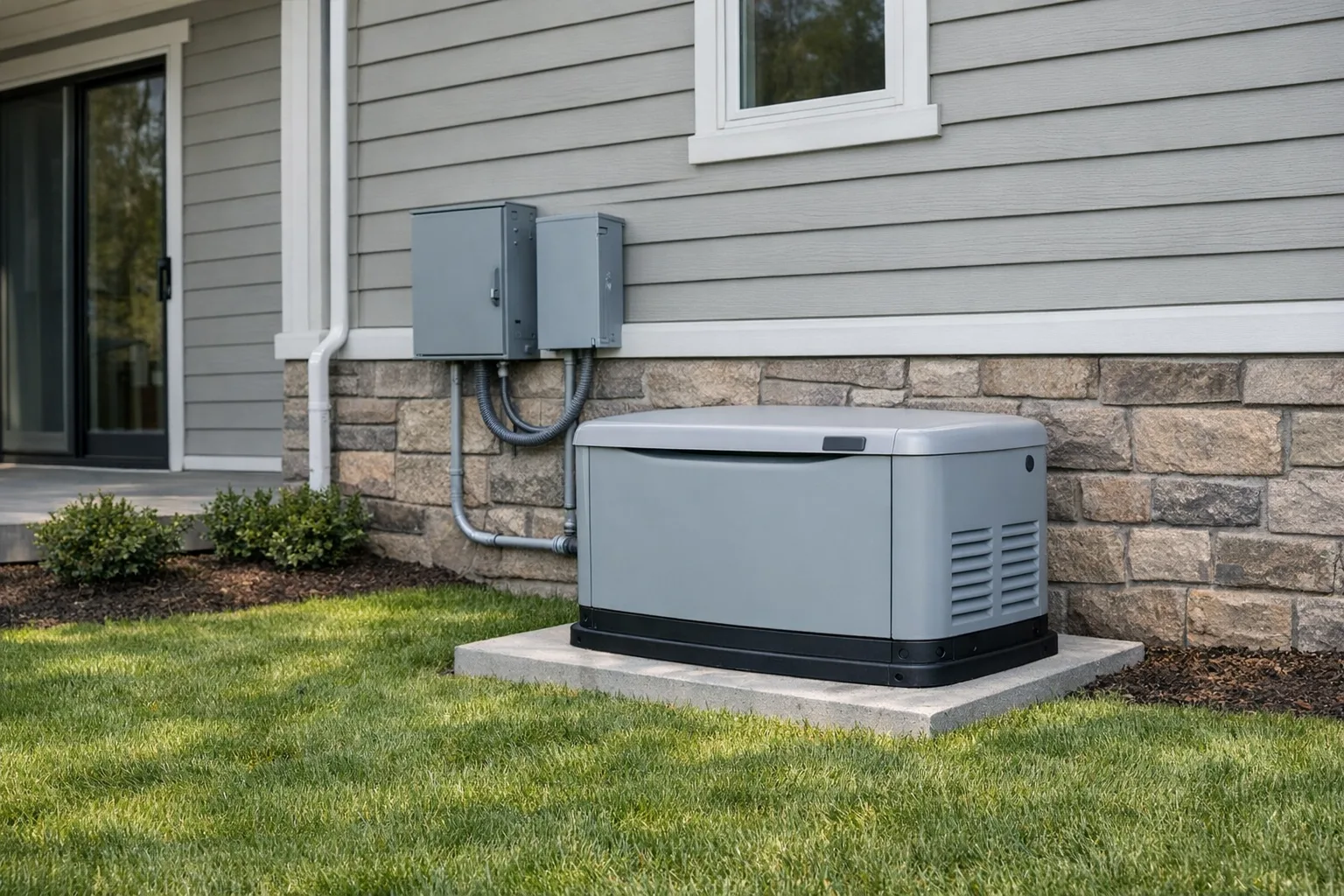
The Shocking Truth About Generator Costs That Salespeople Won't Tell You
Here's the number that will make you rethink everything you thought you knew about buying a whole-house generator: the installation labor costs between $3,000 and $5,000—and that figure doesn't even include the unit itself. In many cases, you're paying almost as much for the installation as you are for the actual generator. That's not a line item on a quote. That's the dirty secret of the backup power industry, and it explains why a $4,000 machine can easily become an $11,000 bill by the time someone's finished threading conduit through your basement.
At Price-Quotes Research Lab, we track these numbers obsessively because the gap between "generator cost" and "installed generator cost" is where homeowners get blindsided. The equipment itself is almost secondary to the infrastructure required to make it work safely and legally in your home.
This guide tears apart the real numbers for 2026. Standby systems versus portable units. Propane versus natural gas. We name the figures that matter and expose the ones designed to confuse you.
What Does a Whole-House Generator Actually Cost in 2026?
The price range sounds simple until you realize how wide it actually is. According to current verified data from TheGeneratorInsider, a whole-house generator typically costs between $7,000 and $25,000 installed. That span isn't a marketing gimmick—it's a function of how dramatically your home's specific requirements can swing the final number.
Most homeowners land somewhere between $10,000 and $15,000 for a properly installed whole-house standby system. That's the realistic middle ground. Anything below $8,000 total requires either minimal installation complexity, a smaller unit, or a contractor cutting corners. Anything above $20,000 typically involves premium brands, extensive gas line work, or homes with unusual electrical configurations.
The AskDoss pricing guide confirms this range, noting that the distinction between "just the unit" and "fully installed" is where most consumers initially miscalculate their budgets. A unit priced at $4,000 at the showroom becomes an $11,000 project because of what happens after it leaves the shelf.
Standby vs. Portable: The Real Cost Difference That Matters
The comparison between standby and portable generators isn't really about the machines themselves. It's about what you're buying: automatic readiness versus manual deployment, permanent installation versus seasonal setup, one unit forever versus something you store in a shed.
Standby generators are permanent fixtures. They cost $6,000 to $11,000 on average for the unit and installation combined, according to HomeGuide's 2026 data. High-end models from brands like Generac, Kohler, or Briggs & Stratton can push into the $15,000 to $25,000 range installed. The premium is real, but so is the convenience: when the power goes out, a standby generator starts itself within seconds. No pulling it out of the garage. No extension cords snaking across the yard. No wondering if it'll start after six months of sitting.
Portable generators tell a completely different financial story. A quality portable unit suitable for emergency home backup runs $500 to $3,000, depending on wattage. But here's where the math gets complicated. You'll need a manual transfer switch or interlock kit ($300 to $1,000 installed), extension cords rated for high amperage ($100 to $300), steady fuel supply, and somewhere to store the thing when it's not in use. Annual maintenance on a portable is also more hands-on, and the usable lifespan is shorter because these units aren't designed for continuous operation.
Reference.com's analysis of portable versus installed systems frames it this way: the decision isn't just about purchase price—it's about installation, permits, fuel, ongoing maintenance, and how you intend to use the unit during an outage. A portable generator that costs $1,500 upfront can easily become a $3,500 to $5,000 total investment when you factor in safe, code-compliant setup. And it still requires you to be home, awake, and physically present to deploy it.
The Automatic vs. Manual Divide
During a storm at 2 a.m., that distinction between standby and portable becomes more than financial. Standby generators have automatic transfer switches that detect utility power loss and start the generator without any human intervention. The transfer switch, which Cove Electric's installation pricing guide identifies as a core installation component, also automatically reroutes power to your home's electrical panel. When utility power returns, the standby system shuts down and reconnects to the grid without anyone lifting a finger.
Portable generators require you to manually connect them, run heavy-duty extension cords, start the engine, and monitor fuel levels. In a blizzard, a ice storm, or any scenario where leaving your home is dangerous, that manual requirement is more than an inconvenience—it's a potential safety issue.
Sizing Your Generator: The Kilowatt Calculation That Drives Everything
Generator output, measured in kilowatts, is the primary driver of both equipment cost and installation complexity. Reference.com's cost analysis identifies systems sized to run an entire home—including HVAC—at 22 to 48 kW as the standard range for whole-house coverage.
Here's how sizing translates to real dollars:
- Essential circuits only (7-10 kW): $2,500-$5,000 for the unit. Covers refrigerator, some lights, and maybe a furnace fan. Cheapest option but doesn't restore normal life during an outage.
- Managed whole-house (14-20 kW): $4,000-$8,000 for the unit. Covers most essential systems plus some comfort loads. The sweet spot for many homeowners.
- Full whole-house (22-48 kW): $6,000-$15,000+ for the unit. Everything runs, including central air conditioning, electric water heaters, and multiple HVAC zones. This is where standby systems get expensive.
Oversizing your generator wastes money on equipment and fuel. Undersizing it means tripping breakers when you try to run the air conditioner. Getting the calculation right requires understanding your home's actual startup and running wattage loads—not just adding up the namesplate numbers on your appliances. A central AC unit might need 4,000 watts to start but only 2,000 to run. Generators must handle those startup surges.
Fuel Type Showdown: Natural Gas vs. Propane
The fuel source you choose affects both your upfront installation cost and your long-term operating expenses. Neither is universally better—the right answer depends on what infrastructure already exists at your property and what you're willing to spend over a decade of ownership.
Natural Gas
If your home already has a natural gas line, connecting a whole-house generator is relatively straightforward. Gas lines to generators typically run $200 to $1,000 in additional plumbing costs, depending on distance and whether the line needs to be upsized. Natural gas fuel costs are generally lower than propane on a per-BTU basis, and you'll never run out of fuel during an extended outage as long as your gas supply is intact.
The complication: in major disasters, natural gas lines can be interrupted. Lines freeze, main breaks occur, or supply pressure drops when demand spikes across an entire region. If gas service is your primary backup fuel source and it fails, your generator is just a very expensive sculpture.
Propane
Propane requires an above-ground or underground tank. If you don't already have one, installation runs $500 to $3,000 depending on tank size and whether excavation is required. A 500-gallon tank—the minimum practical size for whole-house generator backup—costs $1,500 to $3,000 installed. Underground installation with corrosion protection adds another $1,000 to $3,000.
Propane has superior energy density and burns cleaner than natural gas. It also stores indefinitely, making it ideal for remote properties or areas with unreliable gas infrastructure. The tradeoff is that propane costs more per BTU than natural gas, and you need to monitor tank levels—running out mid-outage is a real scenario if the refueling logistics are disrupted.
GeneratorsAdvice's 2026 fuel comparison breaks down the operating cost differences: propane systems typically consume 2-3 gallons per hour at full load for a 20kW unit, while propane prices fluctuate regionally but generally run $2 to $4 per gallon. Natural gas at current rates (roughly $1.50 to $2 per therm) works out cheaper per operating hour, assuming uninterrupted supply.
Diesel: The Quiet Contender
Diesel generators occupy a niche in residential backup power—diesel units tend to be more fuel-efficient and durable for continuous operation, but they require diesel storage (which has its own regulatory considerations), and the units themselves cost more upfront. For most homeowners, diesel only makes sense if you already have diesel storage for heating or generator backup is just one of multiple use cases.
Installation Breakdown: Where Your Money Actually Goes
When McNorton HVAC's 2026 installation guide breaks down the cost factors, it identifies five major components that determine final installed price beyond the generator itself:
1. Transfer Switches and Electrical Panel Work
The transfer switch is the brains of your backup system. It isolates your generator from the utility grid (preventing dangerous backfeed that can injure utility workers) and distributes power to your home's circuits. Automatic transfer switches for standby systems cost $500 to $2,500 depending on amperage and features. Manual transfer switches are cheaper ($300 to $800) but defeat some of the "automatic" advantage of standby systems.
If your electrical panel needs upgrading to accommodate a generator—common in older homes with 100-amp service that should be 200-amp—the panel upgrade alone runs $1,000 to $3,000. This is often where hidden costs surface: the generator quote looked reasonable until the electrician discovered your panel dates to the Reagan administration.
2. Concrete Pads and Enclosures
Standby generators need a stable, level surface. A concrete pad runs $200 to $600 depending on size and whether you're pouring new or placing a pre-cast slab. If aesthetics matter—and in many neighborhoods they do—screening enclosures add another $500 to $2,000. Some municipalities have noise ordinances that require enclosures or specific placement distances from property lines.
3. Fuel Line Installation and Upgrades
New gas or propane connections require licensed plumbers and sometimes gas fitters. The work includes running the line from your meter or tank to the generator location, pressure testing, and ensuring the line is sized correctly for the generator's demand. This work typically runs $500 to $2,500 but can exceed $5,000 if significant excavation or line upsizing is required.
4. Permits and Inspections
Generators require electrical permits and often separate plumbing/ gas permits. Permit costs vary dramatically by municipality—$100 to $500 for electrical, $100 to $300 for gas. Some jurisdictions require engineering stamps or soil reports, particularly for underground propane tanks. Factor in $300 to $1,000 for permits and inspections as a baseline, more in complex jurisdictions.
5. Labor: The $3,000-$5,000 Line Item
Professional installation labor accounts for a substantial portion of total cost. Electricians handling the transfer switch, panel work, and generator connection typically bill $75 to $150 per hour. A straightforward installation might take 16 to 24 labor hours. Complex jobs—running new conduit, upgrading panels, coordinating with gas fitters—can easily exceed 40 hours.
The HomeGuide cost data confirms that labor-only installation averages $3,000 to $5,000. That figure assumes a relatively standard installation in a home with accessible utility connections and a compatible electrical panel. Older homes, buried gas lines, or complex layouts push that number higher.
Lifetime Ownership Costs: What They Don't Tell You at the Sales Counter
Purchase and installation are just the beginning. HomeBuddy's standby generator cost analysis includes annual ownership expenses that savvy buyers should factor into their decision:
Annual maintenance contracts: $250 to $500 per year for professional inspection, oil changes, filter replacements, and system testing. Extended warranties, if purchased, add another $300 to $800 over the coverage period.
Fuel costs during operation: Running a 20kW generator at half load consumes roughly 2 to 3 gallons of propane or 150-200 cubic feet of natural gas per hour. A 24-hour outage at these rates runs $50 to $150 in fuel, depending on rates. Extended outages multiply this significantly.
Battery replacement: Standby generators have starting batteries (12-volt lead-acid or AGM) that require replacement every 2 to 4 years. Battery cost: $75 to $200.
Repairs: Even quality standby generators need occasional repairs. A failing auto-transfer switch, fuel regulator, or voltage regulator can run $300 to $800 in parts and labor. Budgeting $200 to $400 annually in years 5 through 15 is realistic for any standby unit.
Consumer Reports' testing of whole-house standby generators notes that well-maintained units in the 20kW range typically last 15 to 25 years before requiring major overhaul or replacement. Portable generators, by contrast, often show meaningful degradation after 8 to 12 years of use, particularly if not properly maintained or stored with stabilized fuel.
When Battery Backup Enters the Picture
A newer competitor has emerged in the backup power space: whole-home battery systems like Tesla Powerwall or similar large-scale residential battery banks. Nuwatt Energy's 2026 honest comparison frames the trade-offs directly.
Battery systems cost $10,000 to $20,000 installed for sufficient capacity to run a home through multi-hour outages. They have zero fuel cost during operation, require no permits for simple installations, and produce no carbon monoxide risk. However, they have limited capacity—most systems provide 4 to 12 hours of whole-house backup before depletion, and backup duration drops precipitously if you're running HVAC continuously.
The choice between battery and generator isn't binary for many homeowners. A smaller generator (12-16kW) paired with a battery system provides both extended backup capacity and automatic seamless switching. But that combo pushes total installed cost well above $20,000, making it a premium option for those unwilling to compromise on outage experience.
Brand Comparison: What You're Paying For
The generator market has meaningful quality stratification. Nixon Power's Kohler brand analysis provides insight into how brand choice affects total cost:
Generac dominates the mid-market with the largest dealer network and most competitive pricing. Units in the 18-24kW range run $4,000 to $7,000 before installation. Service is widely available, and parts are abundant. The tradeoff is occasional quality control variance and noise levels that run slightly higher than premium competitors.
Champion and Westinghouse occupy the value segment with attractive price points ($3,000 to $6,000 for comparable output) and increasingly solid reliability records. Dealer networks are thinner, which can affect service response times in some regions.
Kohler and Briggs & Stratton command premium pricing—expect to pay 20 to 40% more than equivalent Generac models. The premium reflects quieter operation, more refined engine designs, and historically stronger dealer support. Whether the premium is justified depends on how much you value those distinctions.
Caterpillar and Cummins represent the top tier, with industrial-grade engines, extended warranties, and pricing that reflects commercial-grade durability. Units run $8,000 to $15,000+ before installation. These make sense for homes in remote areas where service calls are expensive, or for homeowners who view generator reliability as non-negotiable.
The Florida Special Case: Regional Considerations
Geographic location materially affects generator installation costs. Dion Generators' comparison for South Florida homeowners highlights how hurricane-prone regions drive demand spikes, longer installation waits, and sometimes premium pricing. Florida, Texas coastal regions, and Gulf states have distinct permitting requirements, elevation considerations for flood zones, and hurricane bracing codes that can add $500 to $2,000 to installation costs compared to temperate climates.
Northern climates have their own complications: cold-weather starting requirements, snow load considerations for equipment enclosures, and winter fuel logistics. The "same" generator installation can cost $1,000 to $3,000 differently depending on your regional building codes and climate conditions.
Getting Accurate Quotes: What Homeowners Should Demand
Price-Quotes Research Lab recommends getting at least three detailed quotes from licensed, insured installers before committing to a whole-house generator project. The quotes should break down:
- Unit cost (model number and specifications)
- Transfer switch cost and model
- Electrical work required (with specific panel and wiring details)
- Gas/propane plumbing work required
- Concrete pad or mounting surface
- Permit fees
- Estimated labor hours and hourly rates
- Warranty coverage details
- Maintenance contract options
Any quote that presents a single "lump sum" without itemization should be viewed skeptically. Hidden costs discovered mid-installation are how $8,000 quotes become $14,000 invoices.
The Bottom Line on Whole-House Generator Costs
A properly installed whole-house standby generator costs between $7,000 and $25,000 in 2026, with most homeowners spending $10,000 to $15,000 for a unit appropriately sized to their home's needs. Portable generators offer lower upfront costs ($1,500 to $5,000 total) but require manual deployment and offer less convenience during the exact emergencies when convenience matters most.
Fuel type selection—natural gas versus propane—affects both installation complexity and long-term operating costs. If gas infrastructure exists at your property, connecting to it costs less than installing a propane tank. If it doesn't, propane offers the advantage of fuel independence and indefinite storage stability.
The labor and infrastructure costs—the transfer switch, electrical panel work, fuel connections, concrete pad, permits, and professional installation—frequently exceed the cost of the generator itself. This is the number that surprises most homeowners, and understanding it is the difference between a realistic budget and a financial shock.
Whatever route you choose, demand itemized quotes, verify contractor licensing and insurance, and get at least three bids. The backup power industry has enough margin for legitimate competition to work in your favor—if you know the numbers going in.