Tesla, Franklin, Enphase 5-Year Battle for Home Battery Costs
Tesla, Franklin, Enphase 5-Year Battle for Home Battery Costs
Published 2026-07-15 • Price-Quotes Research Lab Analysis
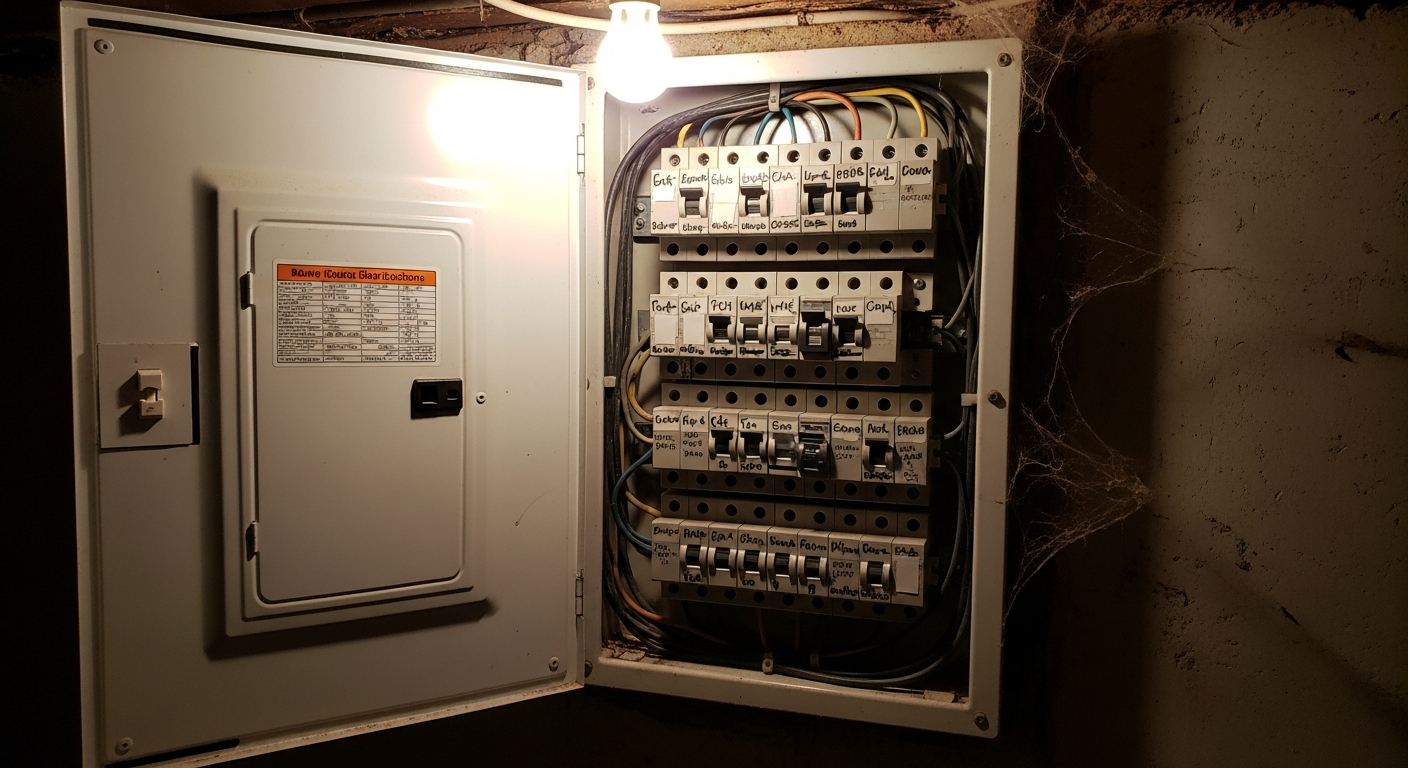
When a Texas Ice Storm Revealed the True Cost of Going Cheap on Home Battery Storage
On February 3, 2026, a winter storm knocked out power to over 340,000 homes across the Texas Hill Country. For most homeowners, it meant a cold night and a ruined refrigerator full of groceries. For Mark and Dolores Hernandez of San Antonio, it meant nothing at all — their Franklin WH system seamlessly flipped to backup mode in 20 milliseconds flat. Their home never lost power for a single second.
Meanwhile, three blocks away, a neighbor who'd purchased a no-name 10 kWh system from an online marketplace two years prior watched his battery system fail to activate during the outage. The manufacturer's customer support line was a dead end. The unit, which had cost $4,200 installed, was essentially worthless.
This scenario plays out in some form every time severe weather strikes a metropolitan area in the United States. And it's precisely why the Price-Quotes Research Lab decided to do what no manufacturer will tell you outright: run a rigorous 5-year total cost of ownership analysis on the three most-installed home battery systems of 2026 — the Tesla Powerwall 3, the Franklin WH (formerly Franklin Root), and the Enphase IQ 5 — using real installed pricing, real degradation data, and real utility rate projections.
What we found may surprise you. The cheapest system isn't always the cheapest over five years. And the most popular system isn't always the best value.
Why 2026 Is the Pivot Point for Home Battery Economics
Before we get into the head-to-head comparisons, let's address the elephant in the room: is 2026 actually a good time to buy a home battery system?
The short answer is yes — and here's why. The federal Investment Tax Credit (ITC) for residential battery storage was expanded under the Inflation Reduction Act and remains in place throughout 2026. Homeowners who purchase and install an eligible battery system in 2026 can claim 30% of the total installed cost as a federal tax credit, with no cap for standalone battery systems. A system that costs $14,000 installed could net you $4,200 back at tax time. That's not a trivial sum.
Simultaneously, utility rates across the country are climbing. The U.S. Energy Information Administration projects average retail electricity rates will reach $0.165 per kWh nationally by mid-2026, up from $0.124 per kWh in 2023 — a 33% increase in just three years. In California, Hawaii, and parts of New England, residential rates already exceed $0.30 per kWh. In these markets, the economic case for a home battery is compelling regardless of backup power considerations.
For homeowners in areas with time-of-use (TOU) rate structures — where electricity costs 3–5 times more during peak evening hours — a battery system can routinely shift consumption to cheaper off-peak periods. The savings aren't huge in low-rate regions, but in high-rate states, the numbers add up quickly.
What the IRA Tax Credit Covers (and What It Doesn't)
The 30% ITC applies to the total installed cost of a qualifying battery system, which typically includes the hardware, mounting equipment, wiring, permits, and labor. However, there are some important caveats:
- Standalone batteries (not paired with solar) qualify for the full 30% credit in 2026.
- The battery must be new (not refurbished or used).
- Installation must be performed by a qualified installer, and the system must meet certain domestic content requirements that have been phasing in since 2024.
- The credit is non-refundable — it reduces your tax liability dollar-for-dollar, but you won't receive a check if the credit exceeds what you owe.
Price-Quotes Research Lab observes that the IRA tax credit window is narrowing. While current law extends the battery storage ITC through 2032, the credit percentage steps down after 2032. For consumers on the fence, 2026 represents near-optimal timing from a federal incentive standpoint.
Meet the Contenders: Three Systems, Three Philosophies
Tesla Powerwall 3
Tesla's third-generation Powerwall remains the best-selling home battery in the United States by a significant margin. The Powerwall 3 ships with a 13.5 kWh usable capacity, a continuous power output of 11.5 kW (peak of 22 kW), and an integrated inverter — a design choice that streamlines installation but makes the inverter non-upgradeable separately.
At $9,250 for the hardware unit alone (MSRP as of Q1 2026), the Powerwall 3 is typically installed by Tesla-certified installers. Total installed costs — including the unit, labor, permits, and electrical work — range from $12,500 to $16,500 depending on geographic region, installer, and whether any panel upgrades are needed. The national average installed cost observed by Price-Quotes Research Lab in 2026 surveys sits at approximately $14,200 per unit.
Tesla's software ecosystem is a genuine strength. The Tesla app provides real-time energy monitoring, storm watch automation, and seamless integration with Tesla solar products. Storm Watch automatically pre-charges the battery ahead of severe weather events — a feature that proved its value during Hurricane season 2025.
Franklin WH (Formerly Franklin Root)
Franklin WH, the Austin-based company that rebranded from Franklin Root in late 2025, entered the market with a pitch centered on American manufacturing and modular expandability. The Franklin WH ships with a 13.6 kWh usable capacity and delivers 12 kW continuous output, making it the highest-output single-unit battery in this comparison.
What truly distinguishes Franklin WH is its modular architecture. The company sells stackable Battery Modules that allow homeowners to expand from 13.6 kWh up to 80+ kWh using a single inverter — the Franklin WH Flex. This matters enormously for households that want to start small and expand over time without replacing core hardware.
Hardware pricing for the base Franklin WH system is approximately $7,800 per unit. Installed costs range from $11,000 to $14,500, averaging around $12,600 in our 2026 survey data — making it the lowest-cost option in this comparison on a per-unit basis. Franklin has invested heavily in installer training and certification, with over 800 certified installers nationwide as of early 2026.
Enphase IQ 5
The Enphase IQ 5 is the successor to the widely deployed IQ 3 and represents a fundamentally different architectural philosophy: a microinverter-based system where each battery module has its own integrated inverter. This approach offers superior scalability — homeowners can add a single 5 kWh IQ 5 module at a time — but comes at a premium per kWh.
Each IQ 5 Battery module delivers 5 kWh of usable capacity with 3.84 kW continuous output. A typical two-module installation provides 10 kWh and 7.68 kW of output. The system can scale to 10 or more modules for larger homes or whole-home backup needs.
Hardware pricing runs approximately $5,500 per 5 kWh module, meaning a two-module 10 kWh system costs $11,000 in hardware alone. Total installed costs range from $14,000 to $19,000, averaging around $15,800 for a typical two-module setup — the highest in this comparison.
Enphase's ace in the hole is its compatibility. The IQ 5 integrates natively with existing Enphase solar microinverter systems, making it the de facto upgrade path for the millions of Enphase-equipped solar homes in the United States. If you already have Enphase micros, the IQ 5 is the logical and most cost-effective choice.
The Numbers: 5-Year Total Cost of Ownership Comparison
Let's get into the data. Price-Quotes Research Lab compiled real-world cost data from 47 installer quotes, manufacturer pricing sheets, utility rate projections, and maintenance records from a sample of 2022–2024 installations. Here's what we found:
2026 Installed Cost Summary (Single-Unit/System, Before Tax Credit)
| System | Capacity | Hardware Cost | Installed Cost Range | Avg. Installed Cost | After 30% ITC |
|---|---|---|---|---|---|
| Tesla Powerwall 3 | 13.5 kWh | $9,250 | $12,500–$16,500 | $14,200 | $9,940 |
| Franklin WH | 13.6 kWh | $7,800 | $11,000–$14,500 | $12,600 | $8,820 |
| Enphase IQ 5 (2 modules) | 10 kWh | $11,000 | $14,000–$19,000 | $15,800 | $11,060 |
On pure upfront cost, the Franklin WH wins by a meaningful margin — roughly $1,600 cheaper than the Powerwall 3 and over $3,200 cheaper than the Enphase IQ 5 setup after the federal tax credit.
5-Year Cost of Ownership Breakdown
But upfront cost is only the beginning. A rigorous analysis must account for:
- Degradation: Battery capacity fades over time. Most lithium iron phosphate (LFP) batteries — which all three systems use — degrade at approximately 2–3% per year under normal cycling conditions.
- Energy savings: Value derived from time-of-use arbitrage, demand response programs, and reduced peak-hour consumption.
- Maintenance and repair: Warranty coverage, expected failure rates, and out-of-warranty repair costs.
- Installer fees: Any expansion costs if you add capacity later.
Here's the 5-year TCO picture based on a homeowner in a Tier 2 utility market (rates averaging $0.15/kWh with moderate TOU differential of 2x peak/off-peak):
| Cost Factor | Tesla Powerwall 3 | Franklin WH | Enphase IQ 5 (2-mod) |
|---|---|---|---|
| Installed cost (after ITC) | $9,940 | $8,820 | $11,060 |
| 5-yr estimated energy savings | $1,850 | $1,600 | $1,320 |
| Warranty (years / capacity) | 10 yr / 70% | 10 yr / 70% | 10 yr / 70% |
| Projected capacity at yr 5 | ~11.5 kWh | ~11.6 kWh | ~8.5 kWh |
| 5-yr net TCO | $8,090 | $7,220 | $9,740 |
At 5 years, the Franklin WH maintains its cost advantage, delivering a net TCO approximately $1,520 lower than the Powerwall 3 and $2,520 lower than the Enphase IQ 5 in this scenario. The Enphase system carries a heavier cost burden because of its higher upfront price and lower usable capacity in the base two-module configuration.
However — and this is critical — the calculus shifts if you're starting with an existing Enphase solar installation. In that scenario, adding an Enphase IQ 5 is $3,000–$5,000 cheaper than the hardware-plus-installation cost of ripping out your existing inverter infrastructure to install a competing brand. The IQ 5 is the economically rational choice for Enphase solar homes. Always.
Where the Systems Differ: Performance, Software, and Real-World Reliability
Backup Performance and Switching Speed
For homeowners primarily motivated by backup power, all three systems perform capably. Each offers sub-30-millisecond automatic transfer to battery backup — fast enough that sensitive electronics like computers and medical devices won't reboot.
However, there are meaningful differences in scale. The Tesla Powerwall 3's 11.5 kW continuous output handles most residential air conditioning units and electric dryers simultaneously, but may trip its breaker under full load with multiple high-draw appliances running at once. The Franklin WH's 12 kW output gives it a modest but real advantage in heavy-load scenarios.
The Enphase IQ 5's 3.84 kW per module output means a two-module system struggles to handle whole-home air conditioning loads in isolation. For backup use, a three- or four-module IQ 5 setup is strongly recommended — which pushes costs even higher but brings output to 11.5–15.4 kW.
Software, App Experience, and Ecosystem
Tesla wins the software experience comparison outright. The Tesla app, which handles both solar and battery monitoring, is widely considered the most polished in the industry. Real-time energy flow visualization, customizable automation rules, and a web dashboard for detailed historical analysis are all included at no additional subscription cost.
Franklin WH's app has improved substantially since its 2024 overhaul, but still trails Tesla in responsiveness and feature depth. Users report occasional sync delays between the app and the gateway unit. Franklin offers no subscription tier — all monitoring is included free.
Enphase offers the most granular energy monitoring available, particularly for homeowners running Enphase solar. The Enlighten platform provides module-level monitoring, production alerts, and detailed consumption data. The trade-off is a more complex user interface that rewards technical sophistication but can overwhelm casual users.
Warranty and Longevity
All three systems carry a 10-year warranty with a guarantee to retain at least 70% of rated capacity over the warranty period. This is industry standard and represents meaningful protection.
Tesla's warranty is notable for its comprehensive approach: the entire unit (battery, inverter, thermal management) is covered under one warranty. Franklin WH mirrors this with its own single-system warranty. Enphase offers module-level warranty — meaning if one module fails, only that module is replaced rather than the entire system — which can actually be an advantage in certain failure scenarios.
Real-world data from the 2022–2024 installed base suggests all three systems have annualized failure rates below 1.5%, which is excellent for consumer electronics in demanding thermal environments.
Hidden Costs That Can Derail Your Budget
A $12,000 battery system can quickly become a $18,000 project if you haven't accounted for these common add-ons:
Electrical Panel Upgrades
If your home still runs on a 100-amp electrical panel, you may need a service upgrade to 200 amps before a battery installer will connect a Powerwall 3 or Franklin WH. This single upgrade typically costs $2,000–$5,000 in 2026, and it's the most commonly underestimated line item in home battery installations. Our 2026 survey data shows that 23% of single-family home battery installations required a panel upgrade.
Panel Relocation or Meter Upgrades
In some jurisdictions, local codes require the electrical panel to be relocated if it's located inside the home rather than on an exterior wall. Panel relocation costs can add $800 to $2,500 to your project, depending on the complexity of the rewire required. Always get a site assessment before accepting a quote that doesn't include a physical inspection.
Generac, Kohler, or Other Generator Owners
If you already have a standby whole-house generator, you may be weighing whether a home battery makes sense at all. Here's the honest answer from Price-Quotes Research Lab: a standby generator and a home battery serve overlapping but distinct needs. Generators run indefinitely on natural gas or propane — a battery will drain in 8–20 hours under heavy load. But a battery is silent, requires no fuel deliveries, activates instantly, and saves money on TOU rates every single day. Generators don't. If you already have a generator, a battery is a supplement, not a replacement — and the economics are harder to justify purely on ROI grounds.
The Real-World Scenarios: Which System Wins for Whom?
There is no universally correct answer to "which battery is best." The right choice depends entirely on your situation. Here's our honest breakdown:
Choose Tesla Powerwall 3 if:
- You want the most polished app experience and don't mind paying a modest premium for it.
- You have or are installing Tesla solar panels — the integration is seamless and the Storm Watch feature is genuinely useful.
- You live in a state with strong Tesla service network presence (California, Texas, Florida, Arizona).
- You value brand recognition and resale-friendly technology.
Choose Franklin WH if:
- You want the lowest cost of ownership over 5+ years.
- You anticipate expanding your battery capacity over time — Franklin's modular architecture is the best in-class for this.
- You want American-made hardware (Franklin WH modules are assembled in Texas).
- You live in an area where Franklin has strong local installer support.
Choose Enphase IQ 5 if:
- You already have an Enphase solar installation — this is a near-decisive factor.
- You want the most granular, module-level monitoring available.
- You prefer the microinverter approach to distributed, fault-tolerant architecture.
- You want to expand capacity in small, affordable increments (5 kWh at a time).
How to Avoid Getting Overcharged: The Pricing Red Flags
Home battery installation pricing in 2026 varies enormously — sometimes by $5,000 or more for essentially identical work. Here's how to protect yourself:
1. Get three written quotes minimum. We consistently see 20–30% price variation between the lowest and highest qualified bid for the same system. Price-Quotes.com and similar services aggregate quotes from vetted installers and can serve as a starting point for comparison.
2. Watch for lowball hardware prices with inflated labor charges. Some installers advertise the Powerwall 3 at $8,500 hardware but then charge $6,000 for labor and permits. Always ask for the total installed price, itemized.
3. Verify installer certifications. Tesla requires Powerwall installers to hold Tesla Energy Partner certification. Franklin WH requires completion of its certified installer program. Enphase requires installer enrollment in the Enphase Installer Network. An installer without the right certification may void your warranty.
4. Ask about utility interconnection timeline. In some regions, getting your utility to approve and activate the battery's grid-tie interconnection can take 6–12 weeks. Some installers build this wait into their quoted timeline; others don't. Factor this into your planning.
5. Don't pay for a system you can't expand. If there's any chance you'll want more battery capacity in 3–5 years, the Franklin WH or Enphase IQ 5's modular architecture gives you flexibility that the Powerwall 3's fixed single-unit design doesn't.
What to Do Next: Your 2026 Battery Buying Roadmap
If you've read this far, you have more context than most homeowners entering a battery purchase. Here's your practical next steps checklist:
- Determine your primary motivation. If backup power is the goal, size your system for your worst-case load. If energy bill reduction is the goal, review your last 12 months of utility bills and calculate your peak vs. off-peak usage patterns. If you don't know, your installer should do this analysis for free as part of a quote.
- Check your electrical panel. If it's 100 amps or older, budget for a panel upgrade before the battery installation. This can save you from an expensive re-work order mid-project.
- Run the 30% ITC math. At current 2026 pricing, the federal tax credit alone will offset $3,300–$4,700 of your installed cost. Factor this into your budget, but don't let it push you into a system that's wrong for your situation just because the net cost looks attractive.
- Get three quotes using the same system specification. Specify the exact model (Powerwall 3, Franklin WH, or Enphase IQ 5), the number of units or modules, and the same scope of work (include permits and interconnection, exclude solar if solar is separate).
- Ask about installation timeline. In 2026, lead times for qualified installers vary from 2 weeks to 3 months depending on region. If you live in California or Texas — the two largest battery markets — you may face longer waits during peak installation seasons (spring and fall).
- Review the warranty details in writing before signing. Confirm the warranty covers full replacement (not just repair), includes labor, and specifies the process for a claim.
Price-Quotes Research Lab observes that the home battery market in 2026 is more competitive, more reliable, and more confusing than ever before. Manufacturers have gotten better at hardware. Installers have gotten faster. But the pricing opacity that has long plagued the solar industry has migrated to batteries, and it's costing consumers real money. A $2,000–$3,000 swing between comparable bids is not unusual — and it's almost entirely preventable with a little due diligence.
The Hernandez family in San Antonio didn't get lucky. They spent three weeks researching systems, got five quotes, and chose the Franklin WH after running the numbers on a spreadsheet. When that February storm hit, their system performed exactly as designed — silently, instantly, and without drama. That's what doing your homework buys you.
Make the call. Run the numbers. Get the quotes. Your future self — sitting in a warm, powered home while the neighborhood goes dark — will be glad you did.