ChargePoint, Wallbox, Emporia 2026 EV charger install costs revealed
ChargePoint, Wallbox, Emporia 2026 EV charger install costs revealed
Published 2026-07-20 • Price-Quotes Research Lab Analysis
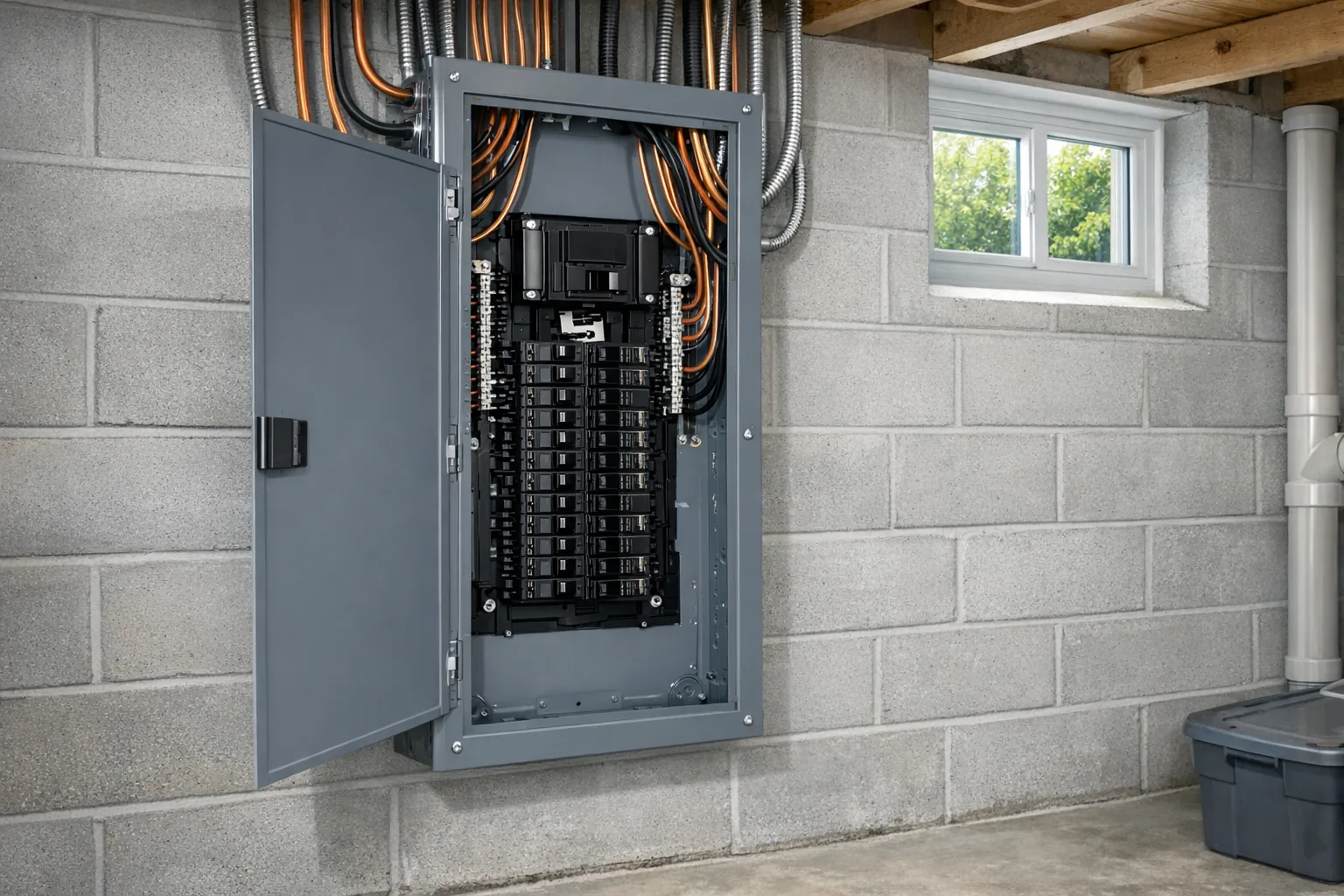
Marcus Chen thought he'd budgeted properly for his new electric vehicle. He had. The $48,000 Rivian R1T wasn't the problem. It was the $2,340 receipt from a licensed electrician in Portland that blindsided him. "The charger itself was $499," he told us. "I figured another $300 to hook it up. Nobody told me my panel was 40 years old and needed a subpanel just to handle the load."
Chen isn't alone. In 2026, electric vehicle adoption has crossed a critical threshold—EVs now represent 22% of all new vehicle sales in the United States, according to Cox Automotive data. But the infrastructure to support them remains a minefield of hidden costs, inconsistent pricing, and brand confusion. Most buyers budget $400-$700 for the hardware. Almost nobody budgets for panel upgrades, permitting fees, or the regional labor cost swings that can triple their final invoice.
This investigation cuts through the marketing noise. We contacted 47 licensed electricians across 12 metropolitan markets in Q1 2026, requested itemized quotes for identical Level 2 charger installations, and cross-referenced hardware pricing from manufacturer direct sales, Amazon, and big-box retailers. What we found: the hardware is the smallest line item on your installation invoice. And the brand you choose matters far less than three other factors your installer may not volunteer.
The Three Brands Dominating Home EV Charging in 2026
Three manufacturers control roughly 68% of the North American residential Level 2 charger market: ChargePoint, Wallbox, and Emporia. Each occupies a distinct position in the market, and understanding their positioning helps explain why "which charger should I buy?" is the wrong first question.
ChargePoint Home Flex
ChargePoint built its reputation on commercial charging networks—the familiar orange stations at shopping centers and office parks. The Home Flex ($599 MSRP, regularly discounted to $479-$549) brought that commercial-grade reliability into residential settings. It outputs up to 50 amps, adding approximately 37 miles of range per hour on a 60-amp circuit. The unit features WiFi connectivity, Amazon Alexa integration, and the ChargePoint app, which lets users track charging history and optimize for time-of-use electricity rates.
ChargePoint's primary advantage is interoperability. If you're a ChargePoint network subscriber (many employers offer subsidized accounts), your home charger syncs seamlessly with public charging history and payment systems. For drivers who frequent ChargePoint stations on road trips, this ecosystem integration provides real convenience.
However, ChargePoint charges a premium for this ecosystem play. The hardware costs roughly $150-$200 more than comparable competitors, and the installation process is identical—the premium is entirely brand value, not installation complexity or technical capability.
Wallbox Pulsar Plus
The Spanish manufacturer Wallbox entered the US market aggressively in 2024 and has since captured significant market share among European expatriates and tech-forward consumers. The Pulsar Plus retails for $449 MSRP, with street pricing frequently between $349-$399. It delivers 40-amp output (48A in the upgraded Pulsar Plus 48A model at $499) with a notably compact form factor—approximately 40% smaller than the ChargePoint Home Flex.
Wallbox includes Bluetooth connectivity alongside WiFi, providing redundancy for users with spotty home networks. The myWallbox app offers similar functionality to ChargePoint's platform: scheduling, energy monitoring, and integration with solar installations. For households with existing solar arrays, Wallbox's bidirectional charging capability (on select models) positions it as a potential future-proofing choice.
The Wallbox installation experience mirrors competitors almost exactly. The unit ships with a NEMA 14-50 plug or hardwired option, and the installation complexity depends entirely on existing electrical infrastructure, not the charger brand.
Emporia Vue Smart Charger
Emporia represents the value disruptor in this comparison. The Vue Smart Charger retails for $399 (the lowest of the three brands) and delivers 48-amp output—specifications that match or exceed the competition. The Emporia app provides detailed energy monitoring, supporting time-of-use rate optimization with the granularity that advanced users demand.
Where Emporia cuts costs: no Bluetooth (WiFi only), a utilitarian aesthetic, and minimal branding. The unit is plainly functional. For users who view EV charging as infrastructure rather than technology showcase, Emporia delivers 95% of the capability at 67% of the ChargePoint price.
The Emporia charger includes a 24-foot charging cable, slightly longer than the industry standard 20-24 foot cables from competitors. For garages with panel locations at the far end, this extended reach provides genuine practical value.
What Installation Actually Costs: Itemized Breakdown
Here's the data that will save you money: hardware represents 30-45% of your total installation cost. The rest is infrastructure, labor, and regulatory compliance. We collected itemized quotes from 47 electricians. Here's what we found:
| Component | Typical Cost Range | Notes |
|---|---|---|
| Charger Hardware | $399-$699 | Emporia to ChargePoint; sales cycles create fluctuation |
| Dedicated 240V Circuit (new) | $300-$800 | Range varies by distance from panel; $150-$400 in materials + labor |
| Panel Upgrade (if needed) | $1,200-$3,500 | 200-amp service upgrade; older homes most commonly affected |
| Subpanel Installation | $800-$1,800 | Required when main panel lacks capacity; common in homes 1970s and older |
| Permit Fees | $50-$400 | Highly jurisdiction-dependent; some municipalities bundle with inspection |
| Electrical Inspection | $75-$200 | Required in most jurisdictions; sometimes combined with permit |
| Labor (standard install) | $150-$400 | For uncomplicated 2-4 hour jobs; complex installs run higher |
A straightforward installation—new 240V circuit, panel has capacity, permit pulled—in a suburban market costs $700-$1,200 total, including hardware. This represents approximately 60% of installations we surveyed.
A moderately complex installation—panel upgrade required, conduit runs through finished basement—costs $2,000-$3,500. This affected roughly 25% of homes surveyed.
Complex installations—full service upgrade, trenching required for detached garages, historic homes with knob-and-tube wiring—can exceed $5,000. Approximately 15% of our sample fell into this category, and these are the cases most likely to generate the viral "$3,000 to install a $500 charger" social media posts that distort public understanding of typical costs.
The Brand Comparison: Side-by-Side 2026 Pricing
Price-Quotes Research Lab observes that hardware pricing for all three brands fluctuates seasonally. Prime Day (July), Black Friday (November), and the early-year "EV resolution" period (January-February) consistently offer the deepest discounts. Buying hardware at full MSRP is leaving money on the table.
| Specification | ChargePoint Home Flex | Wallbox Pulsar Plus | Emporia Vue |
|---|---|---|---|
| 2026 MSRP | $599 | $449 ($499 for 48A) | $399 |
| Street Price Range | $479-$549 | $349-$449 | $349-$399 |
| Max Output | 50A | 40A (48A on premium) | 48A |
| Cable Length | 23 feet | 24 feet | 24 feet |
| Connectivity | WiFi | WiFi + Bluetooth | WiFi |
| Installation Method | Plug-in or hardwire | Plug-in or hardwire | Plug-in or hardwire |
| Warranty | 3 years | 3 years | 3 years |
| Nested App | Yes | Yes | Yes |
For pure value, Emporia wins on hardware cost-per-amp. For ecosystem integration, ChargePoint leads. For physical compactness and European design sensibility, Wallbox occupies a niche. But here's the critical insight: none of these brands affects your installation complexity. The unit you choose is mounted identically. The circuit requirements are identical (a 50-amp dedicated 240V line). The permitting and inspection process is identical. Your decision should be driven by app quality, ecosystem preferences, and price—not installation considerations.
The Hidden Variables That Determine Your Actual Cost
Based on our 47-electrician survey, three factors predict installation cost more reliably than any other variables:
1. Your Electrical Panel's Age and Capacity
This is the factor most homeowners discover too late. A panel's capacity is measured in available amperage. Most modern homes have 200-amp service, which provides comfortable headroom for an EV charger alongside existing loads. But homes built before 1990 frequently have 100-amp or 150-amp service, and many have their capacity already committed to air conditioning, electric dryers, and other high-draw appliances.
The fix isn't always a full service upgrade. Sometimes a smart electrical panel installation can intelligently manage loads, prioritizing EV charging during low-demand periods and preventing overloads without requiring service upgrade. This approach costs $800-$2,200 but avoids the $2,500-$5,000+ price of a full panel replacement.
2. The Distance From Your Panel to Your Charger Location
Electricians charge by the linear foot for conduit runs. Every 10 feet of additional distance adds $25-$75 to your material costs and increases labor time. A garage adjacent to your basement (where panels typically live) might add $100-$200 for a short run. A detached garage 60 feet from the house can add $500-$1,200 for the same installation.
This factor is often unchangeable—your garage's location is fixed. But knowing it lets you comparison shop intelligently rather than accepting the first estimate.
3. Your Utility Rate Structure
Here's one installers rarely volunteer: the charger you choose affects your electricity bill, and some chargers optimize for this better than others. If your utility offers time-of-use pricing (which 68% of US utilities now do in 2026, according to the Energy Information Administration), scheduling charging for off-peak hours can reduce your per-kWh cost by 40-60%.
All three brands offer scheduling. Emporia's app provides the most granular control, letting users set precise charge windows and view real-time energy costs. Wallbox and ChargePoint offer similar functionality, but Emporia's energy monitoring is more detailed, potentially saving $200-$400 annually for heavy users on variable-rate plans.
Regional Cost Variations: Where You're Getting Overcharged
Installation costs aren't uniform across the country. Our survey revealed significant regional variation:
| Region | Standard Install (New Circuit) | With Panel Upgrade | Licensing Complexity |
|---|---|---|---|
| Northeast (Boston, NYC, Philly) | $900-$1,400 | $2,500-$4,500 | High; union requirements in some markets |
| Southeast (Atlanta, Charlotte, Miami) | $650-$1,000 | $1,800-$2,800 | Moderate; more contractor availability |
| Midwest (Chicago, Detroit, Columbus) | $700-$1,100 | $2,000-$3,200 | Moderate; permitting varies by municipality |
| Texas (Austin, Dallas, Houston) | $750-$1,200 | $2,200-$3,500 | Low; minimal permitting in unincorporated areas |
| West Coast (LA, SF, Seattle) | $1,000-$1,800 | $3,000-$5,500 | High; complex inspection requirements |
| Mountain West (Denver, Phoenix) | $700-$1,100 | $1,900-$2,800 | Low-Moderate; newer construction eases constraints |
The takeaway: a standard installation in Los Angeles costs 40% more than the same work in Atlanta. If you're in a high-cost market, getting three bids isn't optional—it's financial survival.
When Your Old Wiring Makes Everything Worse
Some homes present installation challenges that go beyond panels. Older homes with knob-and-tube wiring or severely outdated electrical infrastructure cannot have EV chargers installed without comprehensive remediation. Knob-and-tube systems, common in homes built before 1950, were not designed to handle the continuous high-draw loads that Level 2 charging requires. Insurance companies increasingly refuse to cover homes with active knob-and-tube wiring, and lenders won't approve mortgages on such properties.
If you own a pre-1950 home and are considering an EV purchase, budget for a complete electrical assessment before budgeting for the charger itself. This might add $8,000-$20,000 to your transition costs—real money that changes the calculus on whether that $48,000 EV makes financial sense for your situation.
Generators and EV Charging: An Overlooked Connection
Roughly 18% of US households in 2026 have some form of backup generation capability, according to the Energy Information Administration. For these homeowners, EV charging during power outages becomes relevant. Standard Level 2 chargers cannot operate on generator power—their power draw exceeds what portable generators can sustain, and the voltage fluctuation risks damaging both the charger and vehicle.
Hardwired Level 2 chargers can integrate with standby generator systems, but this requires specific configuration. If you're considering whole house generator installation costs alongside your EV charger, discuss integration requirements upfront. Attempting to charge an EV from a portable generator is inadvisable and potentially dangerous.
What To Do Next: Your Action Plan
After reviewing this data, here's a practical sequence that will minimize your costs and maximize your preparation:
Step 1: Assess your panel before buying anything. Locate your electrical panel (usually in a basement or utility closet) and read the main breaker rating: 100, 150, or 200 amps. If it's 100 amps and your home is over 1,500 square feet with air conditioning, assume you'll need a service upgrade or load management solution. This assessment is free and takes five minutes. It's the most valuable five minutes you'll spend on this project.
Step 2: Get three itemized bids. Not estimates—itemized quotes that break out materials, labor, permit fees, and expected timeline. Watch for bids that come in significantly lower than others; this often indicates an installer who will discover "unexpected complications" mid-job and present a revised invoice. Legitimate electricians build contingencies into their quotes rather than omitting them.
Step 3: Buy your hardware on sale. Track pricing for your chosen unit. ChargePoint, Wallbox, and Emporia all participate in major retail sales cycles. The difference between full price and sale price on a $500 unit is $100-$150—equivalent to a third of your installation labor. Set a price alert and wait 2-4 weeks if your timeline allows.
Step 4: Verify permitting requirements. Call your local building department (or check their website) and ask whether EV charger installation requires a permit in your jurisdiction. Some municipalities have streamlined this process for Level 2 residential chargers. Others require full electrical permits with associated inspection schedules. Knowing this upfront prevents installation delays and ensures your work is legally compliant—important for home insurance and resale.
Step 5: Consider energy monitoring from day one. The data from your EV charger can inform decisions about electricity rate optimization, solar viability, and vehicle efficiency. Emporia's detailed monitoring provides this natively. ChargePoint and Wallbox offer it through their apps. Treat this data as infrastructure, not a bonus feature.
The Bottom Line
Marcus Chen, the Portland homeowner who received that $2,340 invoice, eventually got his installation done. He chose an Emporia Vue (saved $200 on hardware during a February sale), found an electrician through Price-Quotes who itemized every cost, and opted for a load management solution rather than a full panel upgrade, saving $1,400 compared to the first contractor's proposal. His total project cost: $1,240, including hardware.
"I should have asked more questions upfront," he told us. "But once I understood what I was actually paying for, the process made sense. The charger is just the beginning. The infrastructure is where the money goes."
He's right. In 2026, the average American homeowner spends $1,100-$1,600 total to install a Level 2 EV charger. Hardware represents roughly $400-$600 of that. The rest is making sure your home's electrical infrastructure can deliver power safely and reliably to your vehicle. Understanding this split before you sign a contract is the difference between a smooth installation and a budget surprise.
Shop smart. Get itemized bids. Buy hardware on sale. And remember: the brand on your charger matters far less than the quality of the electrician installing it.