Electrical Panel Upgrade Costs in 2026: 100 Amp to 200 Amp by Region
Electrical Panel Upgrade Costs in 2026: 100 Amp to 200 Amp by Region
Published 2026-04-10 • Price-Quotes Research Lab Analysis
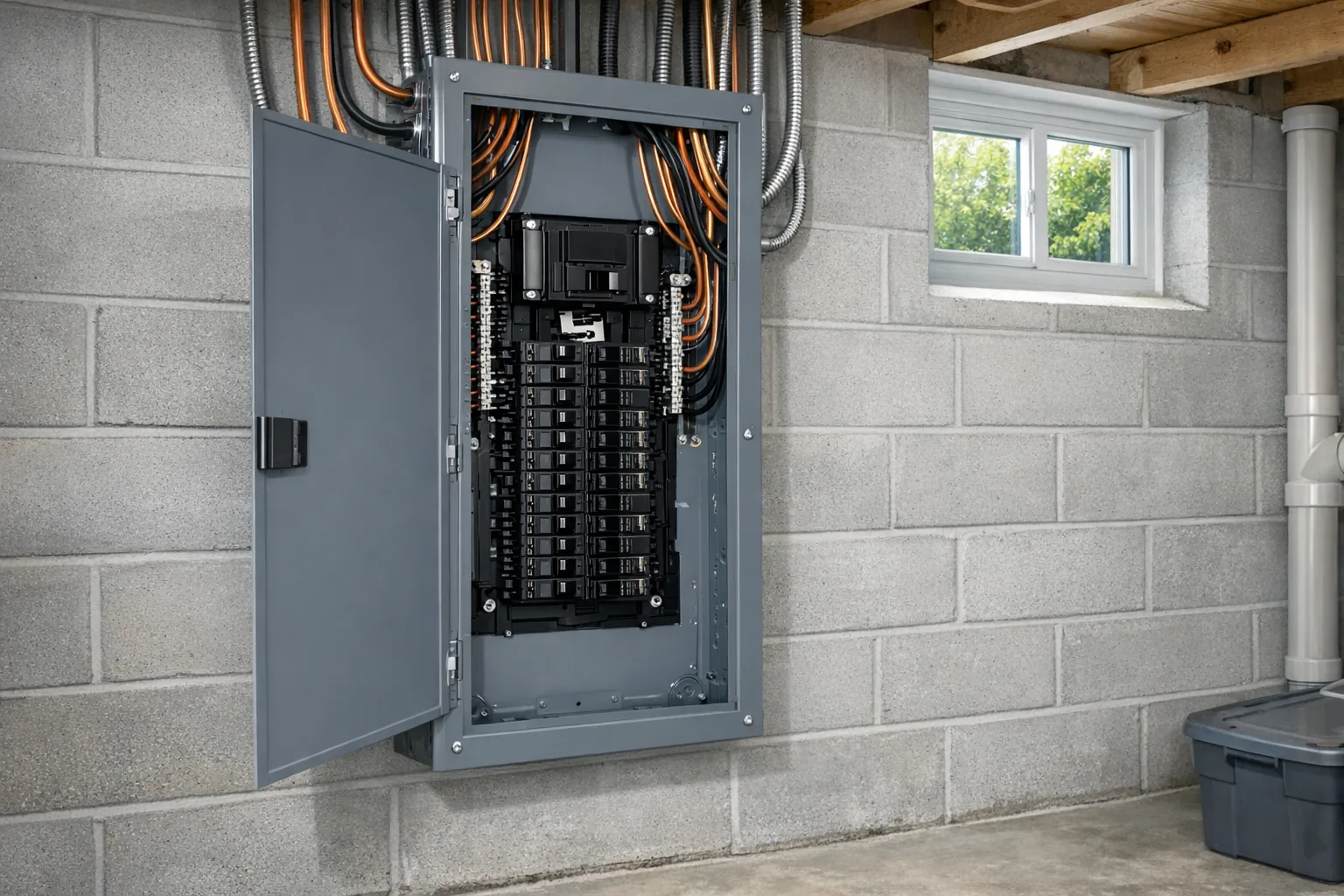
The $4,000 Question Hanging in Half of America's Basements
Your electrical panel is the most dangerous piece of equipment in your house that nobody talks about. Federal Pacific and Zinsco panels—installed in millions of homes built between 1950 and 1980—have documented failure rates where breakers simply refuse to trip during overcurrent conditions. Those breakers can melt, catch fire, or explode. And in 2026, roughly half of all homes in the United States still run on 100-amp service that was designed for an era before electric vehicles, heat pumps, induction ranges, and 40-inch OLED televisions existed. Price-Quotes Research Lab has spent months compiling verified cost data from contractors, permitting offices, and utility companies across every major region of the country. The numbers are clear: upgrading from 100 amps to 200 amps now costs between $1,500 and $4,000 for most homeowners, with regional labor rates and utility coordination requirements driving the bulk of the variance. This is everything you need to know before you sign a single contract.
National Cost Baseline: What You Are Actually Looking at in 2026
Let us start with the numbers that matter. According to current 2026 data from Ecostify and VoltFlow, a standard 100-to-200-amp panel upgrade ranges from $1,500 to $4,000, with most homeowners falling in the $2,000 to $3,000 sweet spot. That covers the new panel, breakers, labor, and basic permitting.
That number climbs fast if your project requires utility coordination. A full service upgrade that includes the meter base, service entrance cable, and coordination with your utility company runs $2,500 to $5,000. In older urban neighborhoods with aging utility infrastructure, costs can push well beyond that. Caudill's electrical cost analysis notes that some full service upgrades involving utility pole work or transformer upgrades have ranged from $5,000 to $30,000 in specific high-complexity scenarios—though those are outliers, not the norm.
A panel swap—replacing a dangerous Federal Pacific or Zinsco panel with a modern Square D or Eaton unit at the same amperage—costs $1,200 to $2,200 including labor and permits. That is a safety upgrade, not a capacity upgrade, and it is often the most urgent type of panel work you can do.
Regional Cost Breakdown: State-by-State Numbers
Electrical work is not remotely uniform across the country. Labor rates, permitting complexity, and local utility requirements vary so dramatically that the same 200-amp panel upgrade can cost $1,500 in rural Missouri and $4,500 in coastal California. Here is the regional breakdown from Price-Quotes Research Lab's 2026 survey.
Northeast: High Labor, High Stakes
The Northeast—New York, New Jersey, Massachusetts, Connecticut, and Pennsylvania—consistently reports the highest electrical upgrade costs in the nation. Labor rates for licensed electricians in metro New York and Boston regularly hit $125 to $175 per hour. A standard 100-to-200-amp upgrade in this region typically lands between $2,500 and $4,500, with New York City projects frequently exceeding $5,000 due to co-op board requirements, Con Edison coordination, and restrictive NYC electrical codes that mandate specific panel placements and fire-rated enclosures in multi-family buildings.
Permitting in Massachusetts and Connecticut adds $200 to $500 in fees, and many municipalities require two inspections—one mid-project and one final. Boston homeowners should budget an extra $300 to $600 for city-specific requirements. The good news: inspectors in this region are experienced, and the process, while expensive, moves relatively fast compared to smaller markets.
Southeast: Competitive Markets, Reasonable Prices
The Southeast—Florida, Georgia, North Carolina, South Carolina, Tennessee, and Alabama—offers the best value for electrical panel upgrades in the country. Labor rates run $65 to $95 per hour, and competition among licensed electricians is fierce. A 100-to-200-amp upgrade in Atlanta, Charlotte, Tampa, or Nashville typically costs $1,500 to $2,800.
Florida adds complexity in coastal counties where hurricane hardening requirements mandate specific outdoor panel enclosures and surge protection devices that are not required inland. Miami-Dade and Broward counties have their own additional wind-load testing requirements for outdoor electrical equipment, which can add $400 to $800 to a project. Sanford Electric's EV charger installation guide confirms that Florida's grid infrastructure upgrades are creating more demand for 200-amp service in new construction and renovation projects.
North Carolina and Virginia municipalities have been streamlining permitting for panel upgrades since 2024, with many counties now offering same-day e-permits for standard residential work. That shaved two to three weeks off project timelines.
Midwest: The Value Sweet Spot
The Midwest—Ohio, Michigan, Indiana, Illinois, Wisconsin, Missouri, and Iowa—delivers the most consistent pricing in the country. Labor rates sit between $75 and $110 per hour, and most municipalities have standardized permit processes that do not require engineering stamps for single-family residential upgrades under 320 amps. A 100-to-200-amp upgrade in Chicago's suburbs runs $2,000 to $3,200, while the same work in Columbus, Indianapolis, or St. Louis lands between $1,500 and $2,500.
Chicago itself is an outlier. The city's electrical code requires licensed plumbers and electricians to coordinate work on older homes, and some historic neighborhoods require panel work to be filed with the Commission on Chicago Landmarks. That adds $500 to $1,200 and two to four weeks to the timeline.
Rural Midwest homeowners sometimes pay less for the actual upgrade work but face surcharges from utilities for service line extensions or upgrades. If your home is more than 200 feet from the transformer, budget an additional $1,000 to $3,000 for the utility to extend the service drop.
Texas: Big State, Big Variance
Texas electrical upgrade costs range from $1,600 to $3,800 depending on the market. Houston and Dallas-Fort Worth follow a similar pattern to the Southeast—competitive pricing, straightforward permitting for most municipalities, and labor rates between $75 and $110 per hour. Austin is the exception. Austin Energy's interconnection requirements and the city's growing smart home and EV adoption rates have pushed average upgrade costs above $3,000 in Travis County.
San Antonio homeowners benefit from CPS Energy's relatively streamlined service upgrade process, with most residential panel upgrades completed within two utility coordination appointments. Texas's lack of state-level licensing reciprocity means your electrician must hold a license specific to the municipality where the work is performed—always verify that before signing a contract.
California and the West Coast: Premium Pricing, Premium Requirements
California, Oregon, and Washington represent the most expensive markets for electrical panel upgrades in the United States. Labor rates in Los Angeles, San Francisco, and Seattle regularly reach $130 to $200 per hour. A standard 100-to-200-amp upgrade in the Bay Area or Los Angeles costs $3,000 to $5,500, with San Francisco projects routinely hitting $4,500 to $6,000 due to PG&E coordination requirements and the city's strict seismic anchoring mandates for electrical equipment.
California's Title 24 energy code requirements mean that panel upgrades in new construction or substantial remodels often trigger solar-readiness and battery storage integration requirements that add $1,500 to $4,000 to a project. Seattle and Portland offer slightly lower labor rates ($95 to $140 per hour) and more predictable permitting timelines, with most upgrades running $2,200 to $3,800.
GVX Remodeling's Vancouver, WA guide notes that Clark County's rapid population growth has created a backlog at the Clark Public Utilities office, extending utility coordination timelines by three to six weeks compared to 2024.
Southwest and Mountain States: Mixed Picture
Arizona, Nevada, Colorado, and New Mexico offer mid-range pricing with notable variation between metro and rural areas. Phoenix and Denver both land in the $1,800 to $3,200 range for standard upgrades. Las Vegas electrical work is complicated by NV Energy coordination requirements that add $400 to $800 to most projects. Colorado mountain communities—Aspen, Vail, Telluride—have extremely limited licensed electrician availability, which drives labor rates to $150 to $225 per hour and upgrades to $3,500 to $6,000.
What Is Driving Your Specific Cost
Regional labor rates explain maybe 40% of the price variance. The other 60% comes down to your specific project conditions. Price-Quotes Research Lab identified seven factors that most aggressively drive electrical panel upgrade costs up or down.
Current panel location matters more than most homeowners expect. Panels mounted inside finished basements or garages are straightforward. Panels buried behind drywall, tile, or finished wood paneling require demolition and repair work that can add $500 to $1,500. Outdoor panels in Pacific Northwest climates where moisture has degraded the surrounding structure require additional remediation.
The age and type of your existing wiring determines compatibility. Knob-and-tube wiring in homes built before 1940 is not automatically a dealbreaker, but it does require that your electrician use compatible breakers and may require a separate inspection by your municipality's historical preservation office in some cities. Aluminum wiring, common in homes built between 1965 and 1972, requires special CO/ALR breakers and pigtailing at every connection point—a detail that adds $300 to $800 to the labor bill.
Your utility company's service policies are a hidden cost driver. Some utilities will upgrade their side of the service connection—transformer, service drop, meter base—for free if your current service is 100 amps or less. Others charge $800 to $2,500 for this work. You will not know which applies to you until you call your utility and open a service request. This step is non-negotiable and should happen before you sign any contract with an electrician. RenoVetted's panel upgrade calculator includes utility coordination as a line item for a reason.
Main breaker vs. subpanel configuration changes the scope. If your current 100-amp panel is functioning as a subpanel fed from a 200-amp main panel elsewhere in the house, the upgrade scope is simpler—you are just swapping out the subpanel. If you are upgrading the main panel, you are dealing with the service entrance cable, the grounding electrode system, and the meter base, all of which expand the scope dramatically.
Local inspection frequency adds time. Some municipalities inspect every residential electrical job. Others only inspect if the scope exceeds 10 circuits or involves panel relocation. Ask your electrician what the local inspection schedule looks like before budgeting your timeline. Each inspection visit adds $75 to $200 to your permit fees and potentially one to three days to the project.
Permits and Inspections: The Bureaucracy You Cannot Skip
Every jurisdiction in the United States requires a permit for electrical panel upgrades. This is not optional and it is not red tape—it is how your municipality ensures that the work meets the National Electrical Code and local amendments. Skipping the permit to save $200 to $500 creates two serious problems. First, your homeowner's insurance can and will deny claims arising from unpermitted electrical work. Second, when you sell the house, the buyer's inspector will flag the panel as unpermitted, and you will be forced to pull retroactive permits and schedule inspections under pressure, often at three times the original cost.
Permit costs vary from $75 in rural counties to $600 or more in cities like Los Angeles and New York. Most municipalities charge based on the valuation of the work—typically 1% to 2% of the project value. A $2,500 upgrade in a Chicago suburb might carry a $40 permit fee. The same upgrade in New York City carries a $200 to $350 permit fee plus an additional $100 to $150 for the required DOB filing fee.
The inspection process typically involves two visits. The first happens after the old panel is removed and the new panel is wired but before circuits are connected—this is the rough-in inspection. The second happens after everything is connected and the system is energized—this is the final inspection. If your electrician does the work correctly, both inspections pass on the first visit and you are done. If there are violations—improper wire sizing, incorrect grounding, missing surge protection—the inspector issues a correction notice and you pay for a reinspection.
EV-Ready Upgrades: Adding Capacity While the Walls Are Open
Electric vehicle charger installation is now the single most common reason homeowners upgrade from 100 to 200 amps. A Level 2 EV charger draws 30 to 50 amps continuously. Add an electric dryer, an electric water heater, and a few smart appliances, and a 100-amp panel is overwhelmed within minutes of plugging everything in.
The smart move is to plan your EV charging capacity during the panel upgrade itself, not after. Installing a 50-amp EV circuit during the panel upgrade costs $300 to $600 in additional materials and labor. Installing that same circuit after the walls are closed, the panel is full, and you need a subpanel or a capacity upgrade costs $800 to $1,500. Design Transition Studio's solar system cost guide notes that pairing an EV-ready circuit with a solar panel installation creates a synergistic upgrade pathway that many homeowners are pursuing in 2026.
Heat pump installations are the other major capacity driver. A modern heat pump draws 20 to 40 amps depending on size, and many homes are installing multiple units—one for heating and cooling, one for a heat pump water heater. If you are planning a heat pump installation, tell your electrician before they pull the permit. They will size the new panel for that load instead of discovering after the fact that you are one circuit short.
Money-Saving Tips That Actually Work
Get at least three estimates. Not two—three. Electrical upgrade pricing has enormous variance, and the spread between your highest and lowest estimate on the same scope of work is often $1,000 to $2,000. The lowest bid is not always the right bid, but you cannot negotiate effectively without competitive options.
Bundle work when possible. If you need a subpanel installed in your garage, or if you are planning to add circuits for a kitchen remodel, do that work during the panel upgrade. Electricians charge minimum trip fees of $150 to $300 for return visits, and material costs for additional circuits are significantly lower when purchased as part of a larger job.
Ask about rebates. Several utility companies offer rebates of $200 to $500 for panel upgrades that improve grid load management, particularly if you are pairing the upgrade with EV charging or solar installation. These are not widely advertised. Ask your utility directly.
Choose your panel brand strategically. Square D and Eaton panels are the industry standards, widely stocked, and familiar to every electrician in the country. Some regions have deals with specific manufacturers that make certain brands cheaper to source. Your electrician will have a preference—listen to it, but confirm that the panel carries at least a 25-year warranty.
Time your project outside of peak season. Electrical contractors are busiest in spring and fall—right before summer cooling loads spike and right before winter heating loads hit. Scheduling your upgrade in January or August often means faster response times and slightly lower bids.
Red Flags When Hiring an Electrician
A licensed electrician will pull the permit in their name. Not yours. If an electrician asks you to pull the permit, that is a red flag. It means they are not confident enough in their work to put their license on the line, and it also means you are assuming liability for the work.
Cash discounts are another warning sign. Legitimate electricians accept credit cards and checks. An insistence on cash-only, particularly for large projects, almost always means the contractor is not reporting income and likely not carrying proper liability insurance. If they are not paying taxes on the job, they are also not properly licensed in most states.
Beware of bids that come in significantly below market rate. Panel upgrade pricing is not opaque—electricians price based on material costs, labor hours, and permit fees, all of which are knowable. A bid that is $1,500 below the next lowest estimate is not a miracle. It is either a contractor who is cutting corners, a contractor who will hit you with change orders mid-project, or a contractor who plans to skip something critical.
Frequently Asked Questions
How long does a 100-to-200-amp panel upgrade take?
For a straightforward swap with no utility coordination required, most electricians complete the physical installation in one to two days. Utility coordination for the service drop upgrade adds two to six weeks before work can begin. Total project timeline from contract signing to final inspection typically runs three to eight weeks.
Can I stay in my home during the upgrade?
Yes, for most of the work. The power will be shut off for approximately four to eight hours on the day of the panel swap. Your electrician will schedule this for a time that minimizes disruption. If your utility company needs to upgrade their side of the service, additional brief outages may occur during that coordination work.
Will my homeowner's insurance premium change after the upgrade?
Upgrading from a Federal Pacific or Zinsco panel to a modern breaker panel often lowers your premium. Many insurers view modern electrical panels as a significant risk reduction. Call your insurance company after the upgrade is complete and provide the permit and inspection sign-off—do not assume the discount will be automatic.
Is a 200-amp panel overkill for a small home?
For most homes under 2,000 square feet with gas heat and no EV charger, 150 amps is often sufficient and costs less to install than 200 amps. However, 200 amps provides meaningful headroom for future additions—electric vehicles, heat pumps, electric water heaters, home additions—and the marginal cost difference between 150-amp and 200-amp panels is typically only $200 to $400 in materials. Price-Quotes Research Lab generally recommends going to 200 amps if your budget allows.
What is the biggest unexpected cost in panel upgrades?
Utility service upgrades. Homeowners consistently underestimate the cost of getting the utility to upgrade their side of the connection. A transformer upgrade, service drop replacement, or meter base upgrade by the utility company can add $800 to $2,500 to a project that was quoted at $2,000. Get a written estimate from your utility before finalizing any electrician's contract.
Do I need an engineer or architect for a residential panel upgrade?
In almost all cases, no. Single-family residential panel upgrades under 320 amps do not require structural engineering or architectural stamps in any US jurisdiction. The electrical permit and inspection process handled by a licensed master electrician is sufficient. The exception is if you are doing a major service entrance relocation that involves structural work or if your local municipality has adopted unusual local amendments requiring engineering review.
How long will a new 200-amp panel last?
A modern residential electrical panel has a functional lifespan of 25 to 40 years with proper maintenance. Breakers should be exercised (turned fully off and on) once a year to prevent contact oxidation. If your panel is more than 20 years old, start budgeting for its eventual replacement.
The Bottom Line
Electrical panel upgrades are not glamorous. Nobody posts photos of their new breaker box on Instagram. But this is one of those projects where spending $2,500 to $4,000 in 2026 can prevent a house fire, eliminate persistent circuit breaker tripping, and position your home for the next 30 years of electrical demand that does not exist yet. The cost spread between the cheapest and most expensive option in your market is probably $1,500 to $2,000. That premium buys you a licensed contractor, proper permitting, code-compliant work, and a home that will not give your insurer a reason to deny a claim. Make the call, get three estimates, and do the work. Price-Quotes Research Lab will be tracking these costs throughout 2026 as grid modernization efforts and EV adoption continue reshaping residential electrical demand across every region of the country.