200 amps won’t cut it when everyone goes electric
200 amps won’t cut it when everyone goes electric
Published 2026-07-11 • Price-Quotes Research Lab Analysis
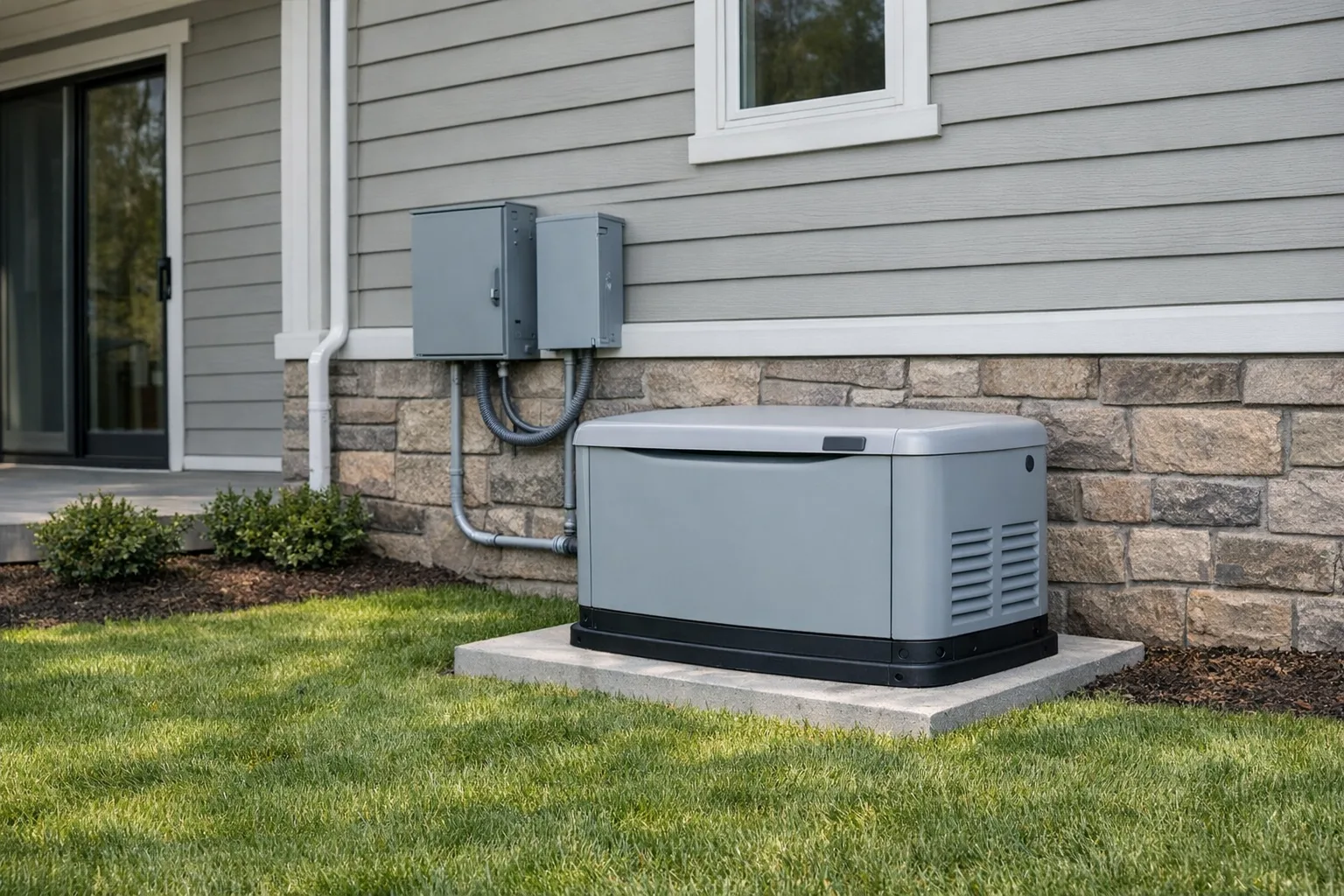
The Breaking Point: Why Your 200-Amp Panel Is Struggling
Mark Chen installed a Level 2 EV charger in his Denver home in early 2026, confident his 200-amp electrical service—standard in most American homes built since the 1960s—would handle the load. Three weeks later, his panel tripped during a cold snap. His heat pump was running, the electric water heater was cycling, and his new charger was pulling 32 amps continuously. The math caught up with him at 10:47 p.m. on a Tuesday.
Chen's situation is becoming the defining electrical challenge for American homeowners in 2026. The convergence of electric vehicles, heat pump adoption (driven by state mandates and federal incentives), and the electrification of everything that once ran on gas has pushed the 200-amp service—the workhorse standard for six decades—past its practical limits in millions of homes.
This isn't a hypothetical problem. According to 2026 projections from the Rocky Mountain Institute, approximately 34% of American homes with 200-amp service will experience capacity constraints when adding a single Level 2 EV charger, compared to just 12% in 2024. The gap widens further for homes that have already electrified heating or hot water.
The 200-Amp Standard: Engineering Legacy Meets 2026 Reality
The 200-amp residential service was standardized in the 1960s when the typical American home ran a refrigerator, lights, a television, and perhaps a clothes dryer. The math was elegant: 200 amps × 240 volts = 48,000 watts of total capacity. Subtract the fixed loads (HVAC, water heater, kitchen circuits), and homeowners had comfortable headroom for everything else.
That calculation no longer holds. In 2026, the average American home carries substantially different fixed loads:
- Central air conditioning (if electric): 15–25 amps running
- Heat pump (replacing gas furnaces): 15–30 amps running
- Electric vehicle charger (Level 2): 32–48 amps continuous
- Electric water heater: 18–24 amps running
- Induction cooktop: 30–50 amps at full blast
- Home office equipment: 3–8 amps
- Pool equipment, workshop tools: Variable, often 20–30 amps
The problem isn't just the sum—it's the continuous draw rule. Electrical code requires that circuits sized for continuous loads (running 3+ hours) be derated to 80% of their capacity. A 40-amp EV circuit actually counts as a 50-amp load on your panel. Add this to the other continuous loads already in your home, and 200 amps starts looking very tight.
The EV Charger Math: Why Level 2 Changes Everything
Level 1 charging (120-volt, standard household outlet) draws 12–16 amps and adds roughly 3–5 miles of range per hour. For plug-in hybrids or low-mileage drivers, this might suffice. But for the 73% of EV owners who drive more than 40 miles daily (2026 J.D. Power EV Ownership Study), Level 1 is impractical.
Level 2 charging (240-volt) delivers 22–62 amps depending on the charger and your home's wiring, adding 25–45 miles of range per hour. A typical 8-hour overnight charge recovers 200–360 miles of range. This capability comes at a cost: Level 2 chargers require dedicated circuits with significant continuous current draw.
Breaking Down EV Charger Power Requirements
| Charger Level | Voltage | Max Amps | Continuous Load | Max Power (Watts) | Range/hr |
|---|---|---|---|---|---|
| Level 1 | 120V | 16A | 20A (derated) | 1,920W | 3–5 miles |
| Level 2 (16A) | 240V | 16A | 20A | 3,840W | 8–12 miles |
| Level 2 (32A) | 240V | 32A | 40A | 7,680W | 25–30 miles |
| Level 2 (48A) | 240V | 48A | 60A | 11,520W | 35–45 miles |
| DC Fast Charge | 480V+ | N/A | N/A | 50–350kW | 180–900 miles/hr |
For most homeowners, a 32-amp Level 2 charger is the practical sweet spot—fast enough for overnight charging while drawing a manageable 40-amp continuous load. But 40 continuous amps on a 200-amp panel is 20% of your total capacity, committed every night your EV charges.
When 200 Amps Hits Its Wall: Load Calculation in Action
Electrical panels aren't sized for the sum of all circuits—they're sized using a load calculation formula that accounts for diversity (not everything runs at once) and continuous versus non-continuous loads. Here's a simplified version of what a 2026 electrician might evaluate for a typical electrified home:
Sample Load Calculation: 2,400 sq ft Home, 2026
| Load | Demand (Amps) | Notes |
|---|---|---|
| Lighting & Receptacles | 3,000W (12.5A) | Square footage × 3W |
| Heat Pump (3-ton) | 30A | Continuous—counts as 37.5A |
| Electric Water Heater | 24A | Continuous—counts as 30A |
| EV Charger (32A Level 2) | 40A | Continuous |
| Dryer | 30A | Non-continuous |
| Kitchen (incl. induction) | 12,000W demand | Table 220.55 calculation |
| TOTAL DEMAND | ~172A | On a 200A service |
At 172 amps of calculated demand, this home technically fits within 200-amp service. But the margin is under 15%—and that assumes a perfect diversity scenario where the heat pump, water heater, and EV charger never run simultaneously. In reality, during a cold morning when you want to preheat the cabin, charge the car, and run hot water simultaneously, the panel will strain.
Price-Quotes Research Lab observes that load calculation results vary dramatically based on climate, home size, and which appliances are electric versus gas. A home in Phoenix running a heat pump in cooling mode has different calculus than a Minnesota home heating through a polar vortex. Homeowners should get a professional load calculation, not just eyeball it.
Your 2026 Options: A Comparison
When 200-amp service proves insufficient, homeowners have four primary paths forward. The right choice depends on your home's existing infrastructure, utility interconnection timeline, and budget.
Option 1: Full Service Upgrade to 320A or 400A
The traditional solution: replace the 200-amp panel and service entrance with higher-capacity infrastructure. In 2026, this typically means a 320-amp service (dual 200-amp meter stacks) or 400-amp service (single large panel).
| Upgrade Type | 2026 Cost Range | Timeline | Best For |
|---|---|---|---|
| 200A → 320A | $3,500–$8,000 | 4–8 weeks | Most EV+heat pump homes |
| 200A → 400A | $5,000–$12,000 | 6–12 weeks | Multi-EV, workshops, future-proofing |
| Subpanel Addition | $1,500–$3,500 | 1–3 weeks | Specific circuits needed |
What you're paying for:
- New panel (200A panels cost $300–$800; 400A panels cost $800–$2,500)
- Service entrance cable upgrade
- Utility service drop upgrade (often $500–$2,000, sometimes free)
- Trenching if underground service (varies wildly)
- Permit and inspection fees ($300–$800 in most jurisdictions)
- Labor (6–20 hours depending on complexity)
The timeline is often the biggest headache. In many metros, utility interconnection queues stretch 6–12 weeks in 2026, as the surge in EV charger and heat pump installations has outpaced utility capacity to process upgrades. Planning ahead is essential.
Option 2: EV Energy Management Systems (EVEMS)
Rather than upgrading the service, EVEMS devices intelligently limit charging based on your home's real-time total load. Think of it as a smart traffic controller for electricity.
When your heat pump kicks on during a cold night, the EVEMS reduces charger output from 32 amps to, say, 16 amps. When the heat pump cycles off, it ramps the charger back up. The EV still charges overnight—just at a variable rate that keeps your panel within capacity.
Popular EVEMS options in 2026 include:
- Wallbox Pulsar Plus with Eco-Smart: $600–$800 + installation ($200–$500)
- ChargePoint Home Flex: $400–$600 + installation
- Tesla Wall Connector (with Load Sharing): $475 + installation
- DCC (Dynamic Current Control) by Electric Aid: $700–$1,100 + installation
For homes with 24A or 32A chargers and moderate other loads, EVEMS can often eliminate the need for service upgrades entirely—saving $4,000–$10,000. The trade-off: your EV charges more slowly during high-demand periods.
Option 3: Time-of-Use Rate Optimization
Many utilities now offer Time-of-Use (TOU) electricity rates where off-peak charging (typically 11 p.m.–7 a.m.) costs 40–70% less per kWh than peak hours. This does two things:
- Reduces your electricity cost for charging (potentially $300–$800/year in savings depending on miles driven)
- Encourages you to charge when other household loads are low, naturally reducing peak demand conflicts
If your utility offers TOU rates and your daily mileage allows charging to complete within the off-peak window, this is a free or low-cost strategy that may eliminate the need for other interventions. Check with your utility for current 2026 rate structures.
Option 4: Reduce Competing Loads
Sometimes the smartest move isn't adding capacity—it's reducing what else draws power. A heat pump water heater replacement, for instance, may cost $800–$2,500 installed but uses 60–70% less electricity than a conventional electric water heater, freeing up 15–20 amps of continuous capacity.
Similarly, if you're considering a heat pump system anyway, some models feature built-in load management that temporarily reduces output when EV charging draws high current. This approach requires upfront investment but can delay or eliminate service upgrades.
The California Exception: Why Costs Differ by Region
California homeowners face a uniquely challenging combination: state mandates pushing heat pump adoption, limited electrical grid capacity, and complex utility interconnection processes. As our research on EV charger costs in California found, homeowners in the Golden State face a $1,200 premium on EV charger installation compared to the national average, driven by utility interconnection costs, permitting complexity, and higher labor rates.
The California Energy Alliance's 2026 projections suggest that 52% of California homes with 200-amp service will require some form of service upgrade to support both a heat pump and EV charging—among the highest rates in the nation.
Generac and Whole-Home Backup: A Related Consideration
For homeowners considering backup power alongside their electrical upgrades, the calculus becomes more complex. As we explored in our analysis of whole-house generator installation costs, standby generators in 2026 range from $5,000–$18,000 installed depending on capacity. If you're already upgrading to 320-amp service, coordinating a generator interlock or automatic transfer switch during the same project can save $1,000–$2,500 versus retrofitting later.
However, don't let backup power needs drive unnecessary service upgrades. Many modern standby generators can integrate with existing 200-amp service using appropriately sized transfer equipment.
The Decision Framework: What Should You Do?
Here's a practical decision tree for 2026 homeowners evaluating their electrical service capacity:
Step 1: Run a Quick Self-Assessment
Answer these questions honestly:
- Do you own an EV (or plan to buy one in the next 2 years)?
- Is your HVAC system electric (central AC, heat pump)?
- Is your water heater electric?
- Do you have an induction cooktop or electric oven?
- Do you work from home with significant equipment loads?
If you answered yes to 3+ questions and are adding EV charging, proceed to Step 2.
Step 2: Get a Professional Load Calculation
For $150–$400, a licensed electrician can perform a National Electrical Code-compliant load calculation that tells you exactly how much headroom you have. This isn't a guess—it's a formula. Many electricians offer this as a standalone service before quoting larger projects.
Price-Quotes Research Lab observes: We recommend getting at least two load calculations and two quotes before committing to a service upgrade. In 2026's busy market, prices can vary by 40–60% for equivalent work. A clear load calculation also gives you leverage if an electrician recommends an oversized upgrade.
Step 3: Evaluate Your Options
| Scenario | Recommended Path | Estimated 2026 Cost |
|---|---|---|
| Small headroom, low miles driven | EVEMS + TOU optimization | $800–$1,500 |
| Moderate headroom, planning to electrify | Prepare wiring, plan upgrade in 2–3 years | $500–$1,000 now |
| No headroom, high miles, electrified home | 320A service upgrade | $4,000–$8,000 |
| Adding multiple EVs or heavy loads | 400A service upgrade | $6,000–$12,000 |
What to Do Next: Your Action Plan
If you're a homeowner reading this in 2026 and wondering whether your electrical service is up to the challenge, here's your checklist:
Immediate Steps (This Month)
- List your existing electric appliances and their approximate age
- Check your current electricity rate—is it TOU? Could it be?
- Research EVEMS options compatible with your preferred charger
- Get a load calculation quote from a licensed electrician
Short-Term Steps (Next 3 Months)
- Collect 2–3 detailed quotes for any recommended work
- Check utility interconnection timelines in your area (this varies enormously)
- Research permits and HOA requirements if applicable
- Consider timing: some utilities offer faster service during off-peak seasons
If You're Buying an EV Soon
Don't wait until delivery day. Schedule your electrical assessment 6–8 weeks before your expected delivery date. EV charger installations in 2026 have a typical lead time of 2–6 weeks for the electrical work alone, plus additional time if utility involvement is required.
The gap between a properly assessed and upgraded home versus an afterthought installation can be $3,000–$8,000—and significantly more if you're caught without charging capability when you need it most.
The Bottom Line
The 200-amp electrical service that served American homes admirably for 60 years is showing its age—not because it's poorly made, but because the demands we place on it have fundamentally changed. A home built for a refrigerator and some lights now runs heat pumps, EV chargers, induction cooktops, and home offices simultaneously.
In 2026, the question isn't whether 200-amp service will work for everyone—it won't. The question is whether you're planning ahead or getting caught when your panel trips at 10:47 p.m. on a Tuesday. The math is solvable. The solutions exist. The only mystery is why more homeowners aren't running the numbers earlier.
For real-time electricity rate comparisons and contractor matching in your area, visit Price-Quotes—your first step toward understanding what your home's electrical future actually costs.