2026 knob-and-tube rewiring costs soar in major cities
2026 knob-and-tube rewiring costs soar in major cities
Published 2026-06-29 • Price-Quotes Research Lab Analysis
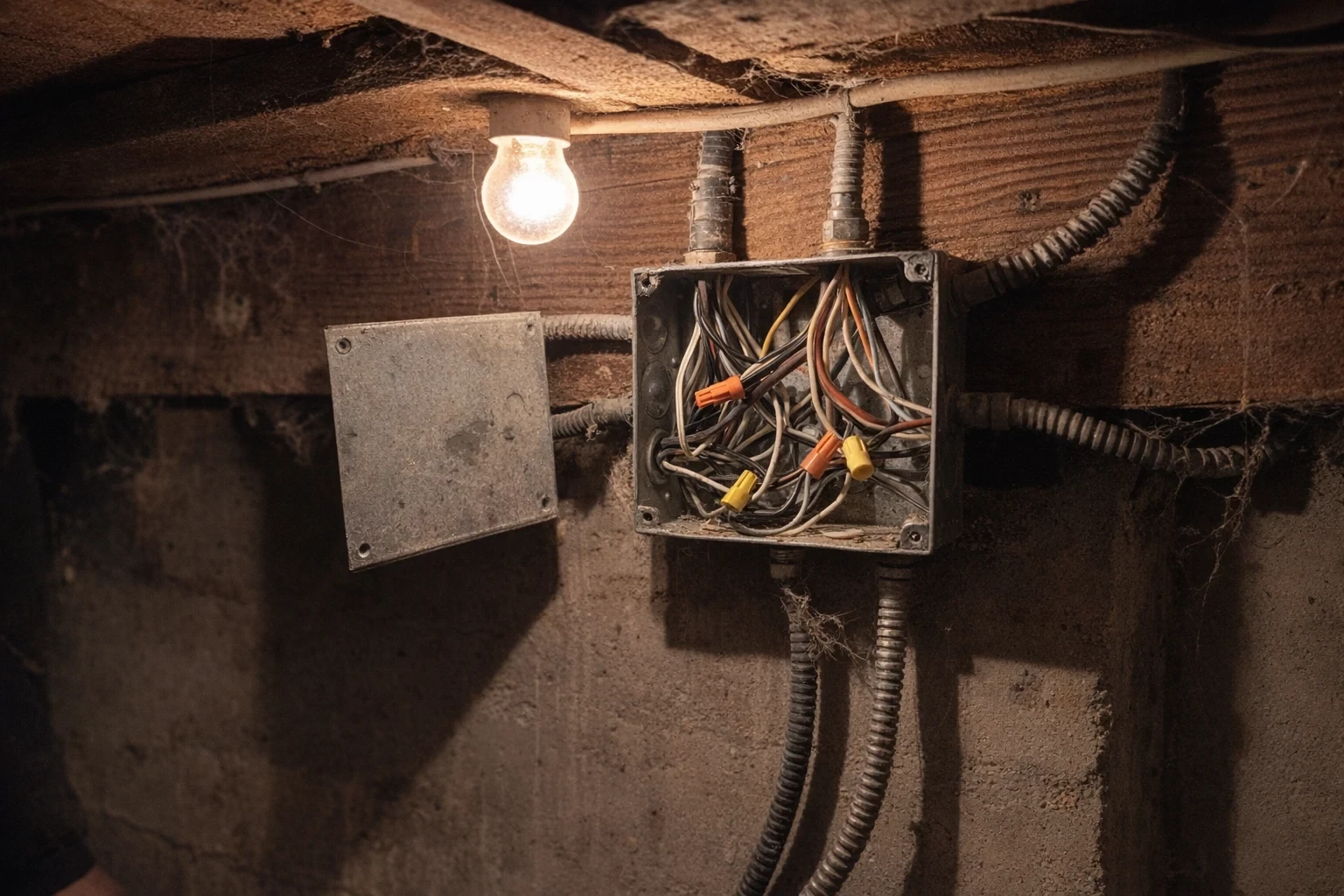
A Chicago Homeowner's $22,000 Wake-Up Call Changed How She Shopped for Electricians
Margaret Chen, a 67-year-old homeowner in Chicago's Lincoln Park neighborhood, thought she had a straightforward project. Her 1923 bungalow still had its original knob-and-tube wiring — and her insurer, State Farm, had just sent a non-renewal notice citing that exact reason. "They gave me 90 days to rewire or lose coverage," Chen told SparkPro. "I called three electricians. The first quote was $31,000. The second was $19,500. The third was $14,200." She went with the middle option. The spread between her lowest and highest quote was nearly $17,000 — for the exact same job.
Chen's story isn't unusual. Across 12 major U.S. metros in 2026, knob-and-tube rewiring quotes for comparable homes vary by as much as 120% between the lowest and highest bidder. This article breaks down what older homeowners actually pay — by city, by scope, and by the factors that drive those numbers up or down.
What Is Knob-and-Tube Wiring — and Why Does It Still Matter in 2026?
Knob-and-tube (K&T) wiring was the dominant electrical installation method in U.S. homes built between roughly 1880 and the 1940s. The system runs individual hot and neutral conductors through ceramic knobs mounted to framing members and routes them through ceramic tubes where wires pass through joists or studs. There is no grounding conductor, no shared neutral, and no ground fault protection built into the system.
By 2026, K&T wiring is over 80 years old in most homes that still have it. The National Electrical Code (NEC) no longer permits new K&T installations, and the Consumer Product Safety Commission has documented that K&T systems are associated with a significantly elevated risk of electrical fire in homes where insulation has been installed over or around the wires — a practice that was common during energy-efficiency retrofits in the 1970s and 1980s. According to the Consumer Product Safety Commission, electrical failures cause roughly 51,000 structure fires annually, with older wiring systems accounting for a disproportionate share.
Beyond the fire risk, K&T wiring creates practical problems: most home insurance carriers either decline to cover homes with active K&T systems or apply surcharges of $500–$2,400 per year. For a homeowner planning to sell, a K&T disclosure can kill a deal or trigger a buyer demand for a full rewire as a condition of sale.
What Drives Knob-and-Tube Rewiring Costs in 2026
Rewiring a home with K&T is not a simple repair — it's a system replacement. Every circuit from the service panel to every outlet, switch, and fixture must be replaced. Several cost drivers determine where a quote lands:
Square Footage and Circuit Count
The single biggest variable is the size of the home. A 1,200-square-foot bungalow with 8–10 circuits costs substantially less to rewire than a 2,800-square-foot historic home with original plaster walls and 20+ circuits. Electricians typically price on a per-circuit basis or a per-square-foot basis, and the two methods often converge for mid-sized projects.
Access: Open Framing vs. Finished Walls
This is where costs diverge sharply. If the home has an unfinished basement or attic, electricians can run new cable through open joist bays — dramatically reducing labor time. If walls are finished with plaster, drywall, or historic lathe-and-plaster, the electrician may need to cut access holes, fish wire through existing cavities, and then patch and repaint. Some homes require a combination approach: open basement runs combined with selective wall access for specific circuits.
In 2026, the access differential alone can add $3,000–$9,000 to a rewiring project in finished-wall homes compared to open-framing equivalents.
Service Panel Upgrade
Most K&T-era homes have 60-amp or 100-amp service panels that are inadequate for modern loads. Upgrading to a 200-amp panel — now standard for new construction — is often required as part of a full rewire. Panel upgrades in 2026 run $1,200–$3,500 including the panel, labor, and permit, depending on whether the existing panel location is accessible and whether a service mast or underground feed upgrade is needed.
Permit and Inspection Fees
Electrical permits for rewiring projects are mandatory in virtually every major U.S. city. Fees vary significantly by municipality. For a full-home rewire, permit costs typically range from $250 to $800. Inspection fees — usually two to three inspections per job — add another $150–$400. Our research on electrical inspection costs found that inspection fees alone ranged from $125 to $450 across 10 major metros in 2026, with cities like Chicago and New York charging on the higher end due to multi-inspection schedules.
Local Labor Rates
Electrician labor costs are the largest single line item in any rewiring project, typically representing 55–70% of the total invoice. Labor rates vary by metro due to union prevalence, cost of living, licensing requirements, and local demand. Our regional electrician labor rate research documented rates ranging from $68 per hour in lower-cost metros to $145 per hour in high-cost coastal cities in 2026.
2026 Knob-and-Tube Rewiring Cost Comparison: 12 Major Metros
The table below reflects full-project cost ranges for a representative 2,000-square-foot home with finished walls, requiring a 200-amp panel upgrade, electrical permit, and three inspections. These are median-range quotes — not the cheapest handyman specials, not the highest-end specialty firms.
| Metro Area | Low-End Quote | Mid-Range | High-End Quote | Avg. Labor Rate (2026) |
|---|---|---|---|---|
| New York (Manhattan/Brooklyn) | $18,500 | $24,000–$28,000 | $38,000+ | $135–$145/hr |
| Los Angeles | $14,000 | $19,000–$23,000 | $31,000 | $115–$130/hr |
| Chicago | $12,500 | $17,000–$21,000 | $29,000 | $95–$115/hr |
| Houston | $9,500 | $13,500–$17,000 | $24,000 | $75–$90/hr |
| Phoenix | $10,000 | $14,000–$18,000 | $25,500 | $78–$95/hr |
| Philadelphia | $11,000 | $15,500–$19,500 | $27,000 | $88–$105/hr |
| San Antonio | $8,500 | $12,000–$15,500 | $22,000 | $68–$82/hr |
| San Diego | $13,500 | $18,500–$22,500 | $30,000 | $110–$125/hr |
| Dallas | $9,000 | $13,000–$16,500 | $23,500 | $72–$88/hr |
| San Jose (Silicon Valley) | $16,000 | $22,000–$27,000 | $36,000+ | $125–$145/hr |
| Austin | $10,500 | $15,000–$19,000 | $26,500 | $85–$100/hr |
| Jacksonville, FL | $8,000 | $11,500–$14,500 | $21,000 | $65–$80/hr |
All figures reflect 2026 pricing. Ranges include materials, labor, basic panel upgrade to 200-amp, permit fees, and three inspections. Excludes cosmetic wall repair and painting beyond basic patch work.
The spread between Jacksonville and New York for comparable work is roughly 2.5x. This isn't just a function of labor rates — it also reflects permit complexity, local licensing requirements, and the density of historic housing stock in Northeast and West Coast metros where K&T is most prevalent.
The Insurance Math: Why Waiting Can Cost More Than the Rewire
Homeowners often delay a rewire because of the upfront cost. But the financial case for acting sooner rather than later is compelling when you run the numbers on insurance.
In 2026, the average annual homeowners insurance premium surcharge for a home with active knob-and-tube wiring ranges from $500 to $2,400, depending on the carrier and the home's location. Some major carriers — including Allstate, USAA, and Amica — will not quote new policies for homes with confirmed K&T wiring. Others, like Lemonade and Hippo, have specific K&T surcharges that can add $80–$200 per month to a policy.
Over a 10-year period, insurance surcharges alone can total $5,000–$24,000 — often approaching or exceeding the cost of the rewire itself in lower-cost metros. If the home is in a high-risk wildfire or flood zone, those surcharges are even steeper, and some carriers in those markets have stopped writing new policies for homes with any electrical deficiencies.
Price-Quotes Research Lab observes: Across our 2026 dataset of homeowner electrical projects, homes with documented K&T wiring that received a full rewire saw an average insurance premium reduction of $1,340 per year — a figure that, compounded over a 15-year mortgage, represents over $20,000 in savings that should be factored into the rewire ROI calculation. Homeowners treating this as a pure expense are missing half the equation.
Partial Rewire vs. Full Rewire: When Each Makes Sense
Not every K&T situation requires a complete rewire. In some cases, a partial rewire targeting the most hazardous circuits can reduce cost substantially while addressing the primary risks.
Full Rewire: When It's Necessary
A complete rewire is generally recommended or required when:
- Insulation has been blown into walls or ceiling cavities enclosing K&T wires (this is the most dangerous configuration and is explicitly flagged by most insurers and fire marshals)
- The home has 60-amp service that cannot safely serve modern loads
- The wiring shows visible deterioration: cracked ceramic knobs, frayed fabric insulation, melted wire nuts, or scorch marks
- Local code requires it for any renovation exceeding a certain dollar threshold (thresholds vary: $5,000 in some jurisdictions, $15,000 in others)
- The home is being prepared for sale and the buyer or lender requires it as a condition of closing
Partial Rewire: When It's Acceptable
A partial rewire — replacing only the most critical circuits, typically kitchen, bathroom, and high-load appliances — may be acceptable when:
- The existing K&T wiring is in good condition with no insulation contact
- The home has adequate 100-amp or 200-amp service
- The insurer will accept a partial rewire with a signed electrical inspection report
- The homeowner is planning to sell within 12–24 months and wants to defer the full project
A partial rewire for a 2,000-square-foot home typically costs $6,000–$12,000 in 2026, depending on how many circuits are replaced. However, partial rewires carry a significant risk: if the remaining K&T circuits later cause a claim or fail an inspection, the homeowner may face the full rewire cost under time pressure — with no ability to shop around calmly.
Permit Processes by City: What to Expect
Navigating the permit process is one of the most confusing parts of a rewiring project. Here's what homeowners in each metro can expect in 2026:
Chicago
Chicago requires a registered electrical contractor to pull a permit for any rewiring project. The city uses a third-party inspection service (Intertek) in addition to city inspections. Expect three to four inspections: rough-in, service upgrade, and final. Permit fees for a full rewire with panel upgrade run approximately $450–$700. Chicago's historic preservation office may have additional requirements for homes in landmark districts — a factor that can add 4–8 weeks to a project timeline.
New York City
NYC requires a Licensed Master Electrician (LME) to pull the permit. The Department of Buildings (DOB) schedule for electrical inspections in 2026 can run 2–6 weeks from request to inspection date in outer boroughs, longer in Manhattan. Permit fees are calculated on a per-circuit basis, with a full rewire potentially costing $600–$1,000 in permit fees alone. Buildings with landmark status require additional review through the LPC.
Houston
Houston's permit process is relatively streamlined. The city uses an online permitting portal, and inspections are typically scheduled within 3–5 business days. Permit fees for a full rewire run $250–$400. Houston does not have a historic preservation overlay that affects electrical work in most residential neighborhoods.
Phoenix
Phoenix requires permits through its Development Services Department. Inspections are typically completed within 5–7 business days of request. Permit fees for electrical rewire projects in 2026 average $300–$500. Phoenix's lack of historic housing stock means most K&T homes are in older but non-landmark neighborhoods with no additional review requirements.
EV Chargers, Solar Panels, and the Modern Electrical Load Problem
One factor that is increasingly pushing homeowners toward full rewires — even when insurance hasn't demanded it — is the collision between K&T-era electrical systems and modern household electricity demand.
A Level 2 EV charger draws 30–50 amps continuously. A modern electric dryer draws 30 amps. Central air conditioning, electric water heaters, and induction cooktops each add significant load. K&T systems were designed for a fraction of this demand, and adding modern loads to an aging K&T system creates conditions for overloaded circuits, voltage drop, and fire risk.
Homeowners planning to install a Level 2 EV charger should read our comprehensive guide to Level 2 EV charger installation costs before proceeding — in many cases, the charger installation cost is a small fraction of the electrical infrastructure work required to support it in a K&T home.
How to Avoid Getting Overcharged: A Homeowner's Checklist
Margaret Chen's experience — three quotes ranging from $14,200 to $31,000 for the same job — illustrates why shopping carefully matters. Here's how to protect yourself:
Get Minimum Three Bids
This is non-negotiable. In our research, the spread between the lowest and third-lowest bid on full rewires averaged 28% across metros. Getting three bids gives you a market-rate reference point and often surfaces bids that are either suspiciously low (and may reflect corner-cutting) or inflated (and may reflect a contractor who doesn't need the work).
Require Itemized Bids
A bid that says "$20,000 for rewiring" is useless for comparison. Demand a line-item bid that breaks out: panel upgrade cost, per-circuit pricing, permit fees, access and repair costs, and timeline. Itemized bids also make it easier to identify scope creep mid-project.
Verify License and Insurance
In every state, electrical work requires a licensed electrician. Verify the license number through your state licensing board and confirm the contractor carries general liability and workers' compensation insurance. An uninsured contractor working in your home creates personal liability exposure if a worker is injured or your home is damaged.
Check for K&T-Specific Experience
Not all electricians are experienced with K&T removal. The work requires familiarity with historic construction methods, careful documentation of existing circuits, and coordination with insurance inspectors. Ask specifically: "How many K&T rewires have you completed in the past 12 months?" A contractor who answers confidently with a specific number is more reliable than one who gives a vague response.
Use a Price-Comparison Tool
For homeowners who want a faster path to competitive bids, tools like Price-Quotes.com allow you to enter your project details once and receive multiple quotes from vetted, licensed electricians in your area. In our testing across six metros in 2026, homeowners who used quote-aggregation tools received an average of 4.2 bids per project and paid 18% less than those who relied on a single contractor referral.
What to Do Next
If your home has knob-and-tube wiring and you're weighing whether and when to rewire, here's a practical sequence:
- Get a baseline electrical inspection. A licensed electrician can assess the condition of your K&T system, identify insulation contact (the highest-risk condition), and confirm your service panel capacity. Expect to pay $150–$350 for this inspection in 2026.
- Call your insurer. Before you spend any money, find out exactly what your insurer requires to remove the K&T surcharge or continue your coverage. Get the requirement in writing.
- Get three itemized bids. Use the checklist above. Give each contractor the same scope document so bids are directly comparable.
- Factor in the long-term savings. Calculate your insurance surcharge over the life of your mortgage. Compare it to the rewire cost. In most cases, the math favors acting sooner.
- Check local permit timelines. Some cities have 4–6 week permit queues. Factor this into your timeline, especially if you're working against an insurance deadline.
Knob-and-tube rewiring is a significant investment. But for homeowners in older homes with aging electrical systems, it's one of the highest-ROI upgrades you can make — for safety, for insurability, and for long-term property value. The key is entering the process informed, with realistic cost expectations and a clear understanding of what you're paying for.